Building on our previous discussion in What Assay Readouts Mean in Peptide Research, this article explores the next logical question: how do researchers study and interpret peptide binding affinity in laboratory settings? Understanding this concept is essential for interpreting assay results and advancing preclinical research involving peptides.
The next logical question is: how is peptide binding affinity studied and interpreted in preclinical research?
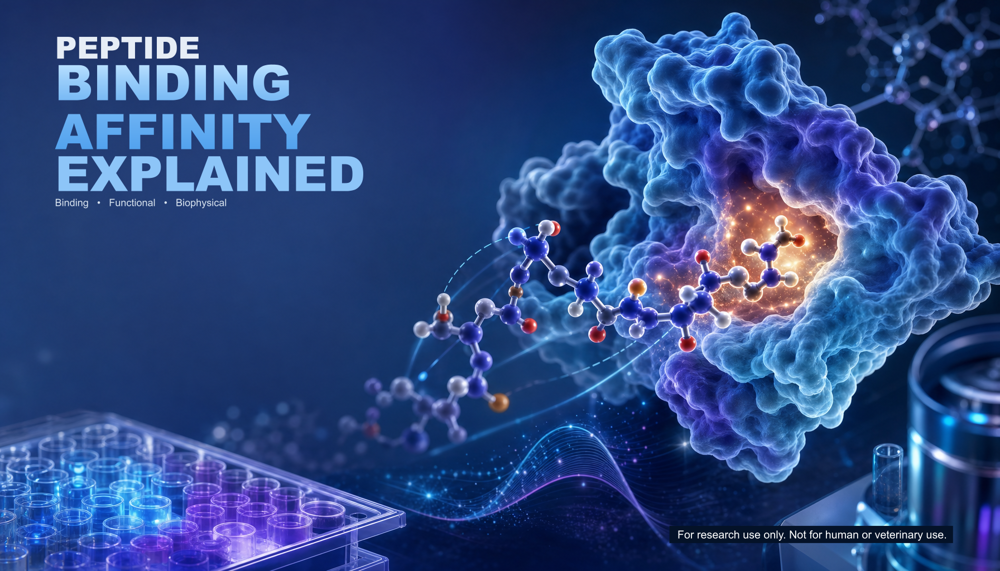
Peptide binding affinity is a fundamental parameter that describes the strength of the interaction between a peptide and its target molecule. In preclinical research, understanding this interaction helps scientists characterize peptide behavior and potential applications in laboratory models. The question arises naturally after learning about assay readouts: how do these measurements translate into meaningful insights about binding strength and specificity?
Main concept foundation
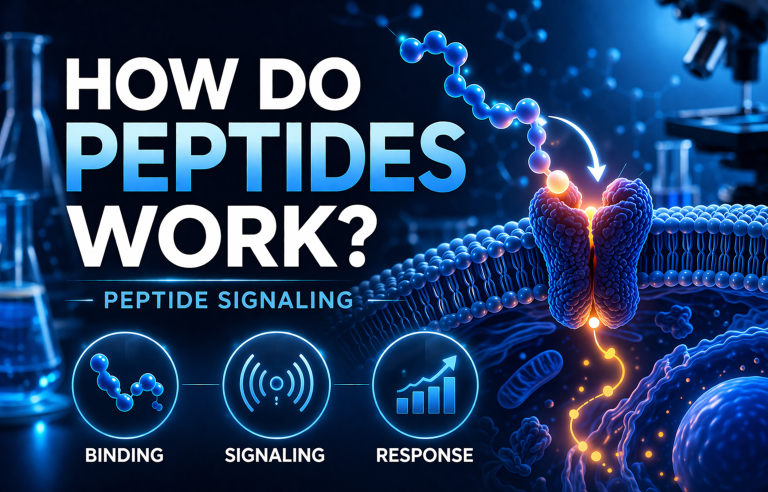
At its core, peptide binding affinity refers to the tendency of a peptide to bind to a specific target, such as a protein or receptor, under defined conditions. It is typically quantified by parameters like the dissociation constant (Kd), which indicates the concentration at which half of the binding sites are occupied. Lower Kd values suggest stronger binding affinity.
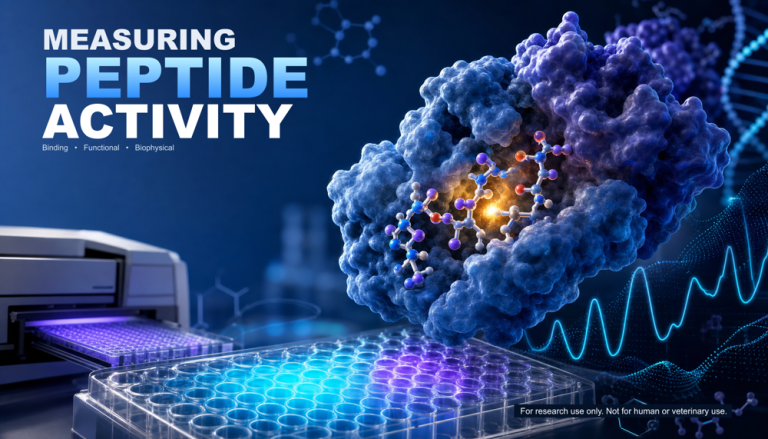
In laboratory settings, measuring binding affinity involves various biophysical and biochemical techniques designed to capture the dynamics of peptide-target interactions. These methods provide quantitative data that researchers use to compare peptides and optimize their properties.
- Dissociation constant (Kd) as a key metric
- Binding strength reflects interaction stability
- Quantitative assays inform peptide optimization
Equilibrium Binding Assays: Measuring Affinity under Steady-State Conditions
Equilibrium binding assays are among the most common approaches to study peptide binding affinity. These assays measure the extent of binding once the system has reached a steady state, where association and dissociation rates balance. By varying peptide or target concentrations, researchers generate binding curves that reveal affinity parameters.
This method is widely used because it provides direct insight into the strength and specificity of interactions without requiring kinetic data.
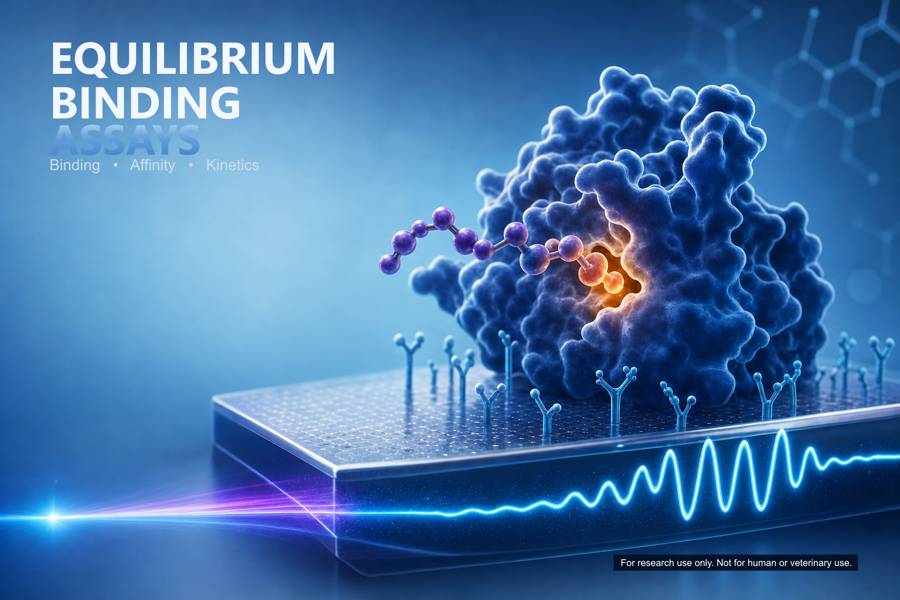
Following the generation of binding curves, data fitting techniques help calculate the dissociation constant (Kd) and other parameters. These values allow comparisons across peptides and experimental conditions, aiding in the selection of candidates for further study.
- Use of radiolabeled or fluorescent peptides
- Scatchard plot and nonlinear regression analyses
- Application in receptor-ligand interaction studies
Learn Peptide Research the Simple Way
If you’re new to peptide research, this beginner-friendly guide walks through the core concepts step by step so you can better understand how peptides are studied in laboratory settings.
- Understand how peptides are studied in laboratory settings
- Learn the core concepts behind peptide research
- Start with a beginner-friendly guide — no technical background required
For educational and research purposes only.
Surface Plasmon Resonance: Capturing Real-Time Binding Kinetics
Surface plasmon resonance (SPR) is a powerful technique that measures peptide binding affinity by monitoring interactions in real time. Unlike equilibrium assays, SPR captures both association and dissociation rates, providing a kinetic profile of the binding event. This allows researchers to understand not only how tightly a peptide binds but also how quickly it associates and dissociates from its target.
SPR is widely used in preclinical research to characterize binding mechanisms and optimize peptide candidates.

Data from SPR experiments yield kinetic constants (ka and kd) and equilibrium constants (KD). These comprehensive profiles help distinguish peptides with similar affinities but different binding dynamics, which can be critical in laboratory model design.
- Label-free detection of binding events
- Determination of association (ka) and dissociation (kd) rates
- Useful for detailed characterization of binding mechanisms
Isothermal Titration Calorimetry: Thermodynamic Insights into Binding
Isothermal titration calorimetry (ITC) offers a complementary approach by measuring the heat changes during peptide-target binding. This technique provides thermodynamic parameters such as enthalpy, entropy, and binding affinity, giving a holistic view of the interaction forces at play.
ITC is valuable in research contexts where understanding the driving forces behind binding can inform peptide design and experimental interpretation.
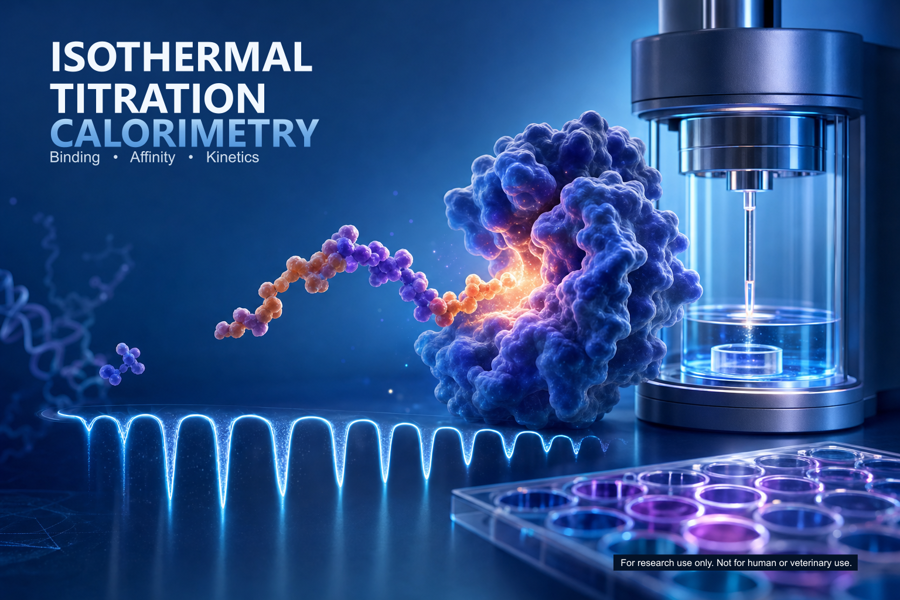
By analyzing the heat released or absorbed during titration, ITC experiments yield binding constants that correlate with affinity. This method requires relatively large sample amounts but provides rich data that enhance understanding beyond simple affinity metrics.
- Direct measurement of binding thermodynamics
- Determination of enthalpy (ΔH) and entropy (ΔS)
- Useful for dissecting binding forces in preclinical studies
How These Ideas Work Together
Each method described offers unique insights into peptide binding affinity, and together they provide a comprehensive picture useful in preclinical research. Equilibrium binding assays establish baseline affinity values, SPR adds kinetic context, and ITC reveals thermodynamic underpinnings. Integrating these data helps researchers interpret assay results accurately and design peptides with desired interaction profiles.
Understanding these complementary approaches allows for a nuanced interpretation of binding data, supporting informed decisions in peptide research and development within laboratory settings.
Key Takeaways
- Peptide binding affinity quantifies interaction strength, commonly expressed as Kd.
- Equilibrium binding assays provide steady-state affinity measurements.
- Surface plasmon resonance offers real-time kinetic data on binding.
- Isothermal titration calorimetry reveals thermodynamic parameters of binding.
- Combining methods enriches interpretation and supports peptide optimization.
Ready to Go Deeper Into Peptide Research?
If this helped you understand the different types of peptides, the next step is building a stronger foundation. Our beginner guide walks through the key concepts researchers use, without the confusion.
Designed for beginners. No technical background required.
- Learn the core concepts behind peptide research
- Understand key factors like stability, purity, and documentation
- See how peptides are studied and evaluated in research settings
For educational and research purposes only.
What Comes Next
Now that we’ve covered Peptide Binding Affinity Explained, the next question leads naturally into Concentration-Response Curves in Peptide Studies.
In the next article, we’ll explore Concentration-Response Curves in Peptide Studies.
Frequently Asked Questions
A low Kd value suggests high binding affinity, meaning the peptide binds strongly to its target at low concentrations.
Measuring kinetics provides information on how quickly a peptide associates with and dissociates from its target, which affects biological activity and assay interpretation.
Binding affinity from laboratory assays offers valuable insights but does not fully predict in vivo behavior due to complex biological factors.
Challenges include ensuring assay sensitivity, avoiding nonspecific interactions, and interpreting data within the context of experimental conditions.
Research Use Only Disclaimer
This content is provided for educational and informational purposes only.
For research use only. Not for human or veterinary use.
Not intended to diagnose, treat, cure, or prevent any disease or condition.
PubMed References
- Hulme EC, Trevethick MA. Ligand binding assays at equilibrium: validation and interpretation. Br J Pharmacol. 2010;161(6):1219–1237.
- Nikolovska-Coleska Z. Studying protein-protein interactions using surface plasmon resonance. Methods Mol Biol. 2015;1278:109–138.
- Perozzo R, Folkers G, Scapozza L. Thermodynamics of protein-ligand interactions: history, presence, and future aspects. J Recept Signal Transduct Res. 2004;24(1–2):1–52.