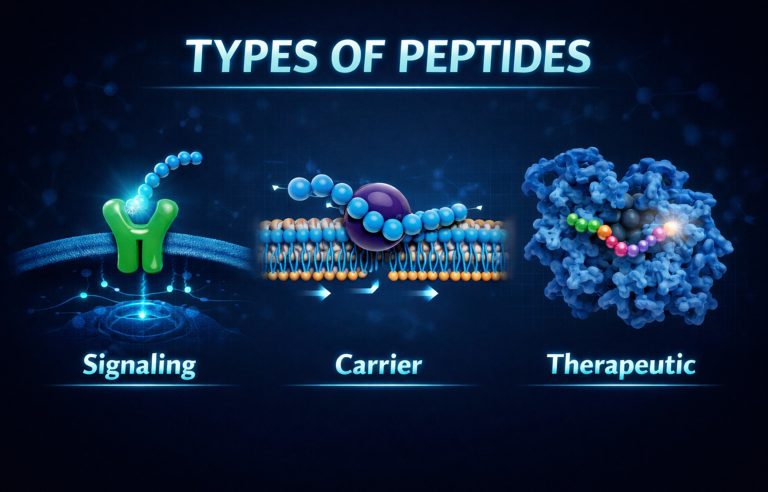
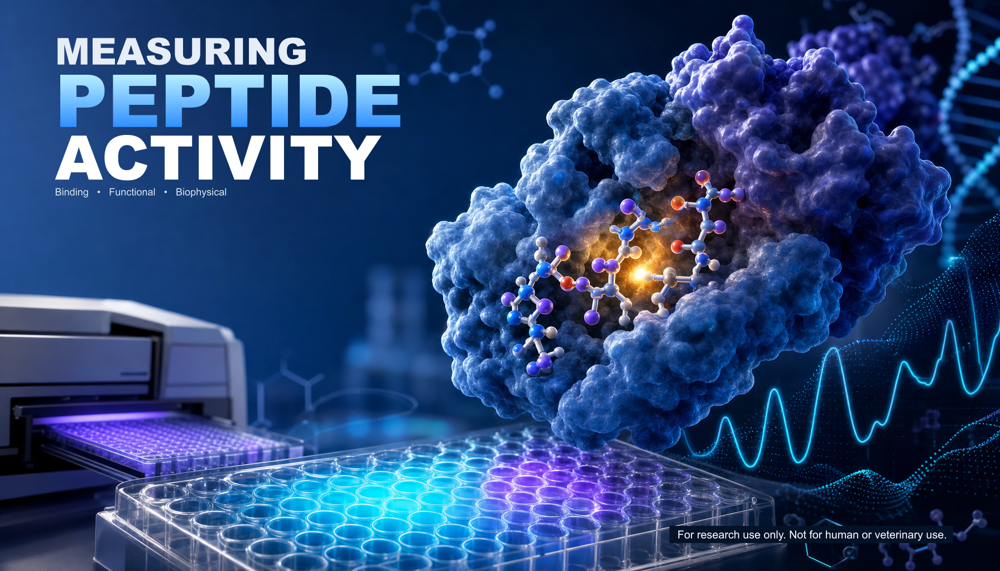
If you missed it, start here: How Peptides Are Studied in Laboratories (Methods & Techniques). Building on the foundational understanding of peptide study methods, the next logical step is to explore how researchers measure peptide activity in laboratory settings. This article focuses on the assays and techniques used to assess peptide function, binding behavior, and data interpretation in preclinical research.
The next logical question is: How do researchers measure peptide activity in lab studies?
Understanding how peptides behave in laboratory assays is crucial for interpreting their biological potential. Researchers use a variety of peptide activity assays to quantify interactions, binding affinities, and functional outcomes. These assays provide measurable readouts that help elucidate peptide mechanisms in controlled, non-clinical environments. Exploring these methods answers the important question of how peptide activity is reliably assessed in research contexts.
By examining assay types, readouts, and data interpretation strategies, this article aims to clarify the tools and approaches scientists use to study peptide activity in vitro and in other preclinical models.
Main concept foundation: What are peptide activity assays?
Peptide activity assays are laboratory methods designed to measure the functional behavior of peptides under controlled experimental conditions. These assays help researchers quantify how peptides interact with target molecules, such as proteins or receptors, and assess their biochemical or biophysical effects. The data generated from these assays provide insights into peptide binding, stability, and potential biological roles.
Assays vary widely depending on the research question but generally focus on detecting changes in molecular interactions, enzymatic activity, or cellular responses. In preclinical research, these assays are essential for characterizing peptide properties before any clinical considerations.
- Binding assays to evaluate peptide affinity for targets
- Functional assays measuring biochemical activity
- Biophysical assays assessing peptide stability and structure
Binding behavior assays: Measuring peptide-target interactions
One of the core mechanisms to assess peptide activity is through binding assays, which quantify how peptides interact with specific molecular targets. These assays often use techniques such as surface plasmon resonance (SPR), isothermal titration calorimetry (ITC), or fluorescence polarization to detect binding events in real time or through endpoint measurements. The strength and kinetics of these interactions provide valuable data on peptide affinity and specificity.
In laboratory settings, binding assays help researchers determine whether a peptide can effectively engage with its intended target, which is a critical step in understanding its potential function and mechanism of action.
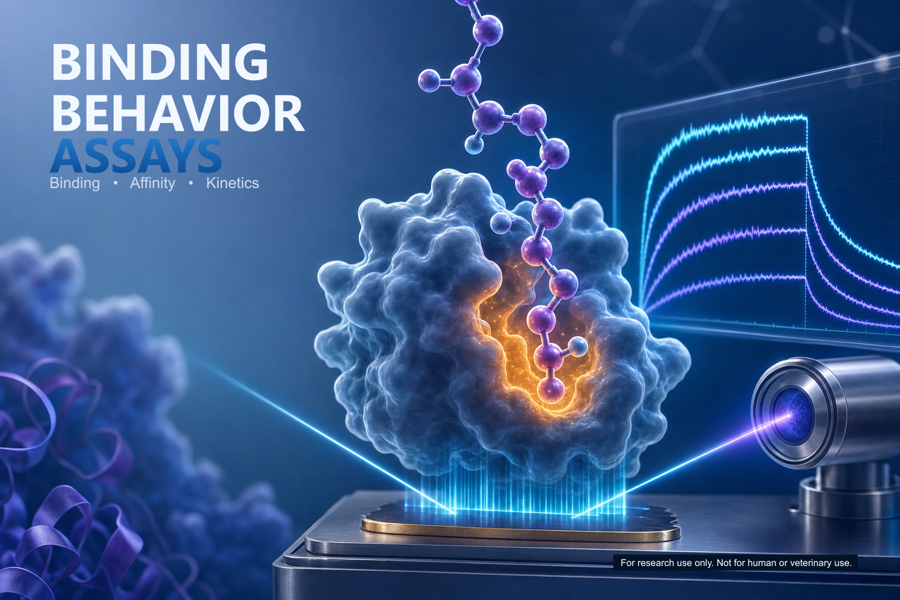
These assays often generate binding curves and calculate parameters such as dissociation constants (Kd), which indicate the affinity between peptide and target. Interpretation of these data requires careful consideration of assay conditions and controls to ensure reliability. Binding assays are widely used in preclinical research to screen peptide candidates and optimize their properties.
- Surface plasmon resonance (SPR) for real-time binding kinetics
- Isothermal titration calorimetry (ITC) measuring binding thermodynamics
- Fluorescence polarization detecting molecular interactions in solution
Learn Peptide Research the Simple Way
If you’re new to peptide research, this beginner-friendly guide walks through the core concepts step by step so you can better understand how peptides are studied in laboratory settings.
- Understand how peptides are studied in laboratory settings
- Learn the core concepts behind peptide research
- Start with a beginner-friendly guide — no technical background required
For educational and research purposes only.

Functional assays: Assessing biochemical activity of peptides
Functional assays evaluate the biochemical or biological activity elicited by peptides in laboratory models. These assays can measure enzyme inhibition or activation, receptor signaling, or other downstream molecular events triggered by peptide interaction. Common formats include colorimetric, luminescent, or fluorescent readouts that provide quantitative data on peptide activity.
Such assays are essential for understanding whether peptides can modulate biological pathways in vitro, providing a foundation for further mechanistic studies.

Data from functional assays often require normalization and comparison against controls to interpret the relative activity of different peptides. These assays are typically optimized for sensitivity and specificity to detect subtle changes in molecular function. They are widely used in preclinical research to characterize peptide candidates and guide structure-activity relationship studies.
- Enzyme inhibition assays measuring peptide effects on catalytic activity
- Reporter gene assays detecting receptor-mediated signaling
- Fluorescent probes tracking biochemical changes in vitro
Biophysical assays: Understanding peptide stability and structure
Biophysical assays provide insight into the physical properties of peptides, including their stability, folding, and structural characteristics. Techniques such as circular dichroism (CD) spectroscopy, nuclear magnetic resonance (NMR), and mass spectrometry are commonly employed to analyze peptide conformation and integrity in laboratory settings.
These assays complement binding and functional studies by revealing how peptide structure influences activity and interaction with targets.

Understanding peptide stability under experimental conditions is important for interpreting assay results and designing peptides with improved properties. Biophysical data also aid in identifying degradation products or aggregation, which can affect assay outcomes. These methods are integral to comprehensive peptide characterization in preclinical research.
- Circular dichroism (CD) spectroscopy for secondary structure analysis
- Nuclear magnetic resonance (NMR) providing detailed structural information
- Mass spectrometry identifying peptide mass and modifications
How These Ideas Work Together
Peptide activity assays collectively provide a multidimensional view of peptide behavior in laboratory research. Binding assays establish whether peptides interact with their targets and characterize the strength and kinetics of these interactions. Functional assays then determine if these interactions translate into measurable biochemical effects, while biophysical assays contextualize these activities within the framework of peptide structure and stability.
By integrating data from these complementary approaches, researchers can form a comprehensive understanding of peptide activity, guiding further experimental design and peptide optimization. This holistic view is essential in preclinical research to interpret assay readouts accurately and to advance peptide science responsibly.
Key Takeaways
- Peptide activity assays measure how peptides interact and function in lab settings.
- Binding assays quantify peptide-target affinity and kinetics.
- Functional assays assess biochemical effects triggered by peptides.
- Biophysical assays reveal peptide structure and stability.
- Combining assay data supports comprehensive peptide characterization in preclinical research.
Ready to Go Deeper Into Peptide Research?
If this helped you understand the different types of peptides, the next step is building a stronger foundation. Our beginner guide walks through the key concepts researchers use, without the confusion.
Designed for beginners. No technical background required.
- Learn the core concepts behind peptide research
- Understand key factors like stability, purity, and documentation
- See how peptides are studied and evaluated in research settings
For educational and research purposes only.
What Comes Next
The next article in this series, What Assay Readouts Mean in Peptide Research, will build on the understanding of peptide activity assays by exploring how to interpret the data these assays generate. This continuation will help researchers and beginners alike make sense of assay results within the broader context of peptide science in laboratory research.
Frequently Asked Questions
Peptide activity assays are used to measure how peptides interact with targets and their functional effects in laboratory research, providing insights into their biochemical behavior.
No, peptide activity assays discussed here are intended for preclinical research and laboratory settings, not for clinical diagnosis or treatment.
Binding assays focus on measuring the interaction between peptides and targets, while functional assays evaluate the biochemical or biological effects resulting from those interactions.
Peptide stability affects how peptides maintain their structure and function during assays, influencing the accuracy and interpretation of activity measurements.
Research Use Only Disclaimer
This content is provided for educational and informational purposes only.
For research use only. Not for human or veterinary use.
Not intended to diagnose, treat, cure, or prevent any disease or condition.