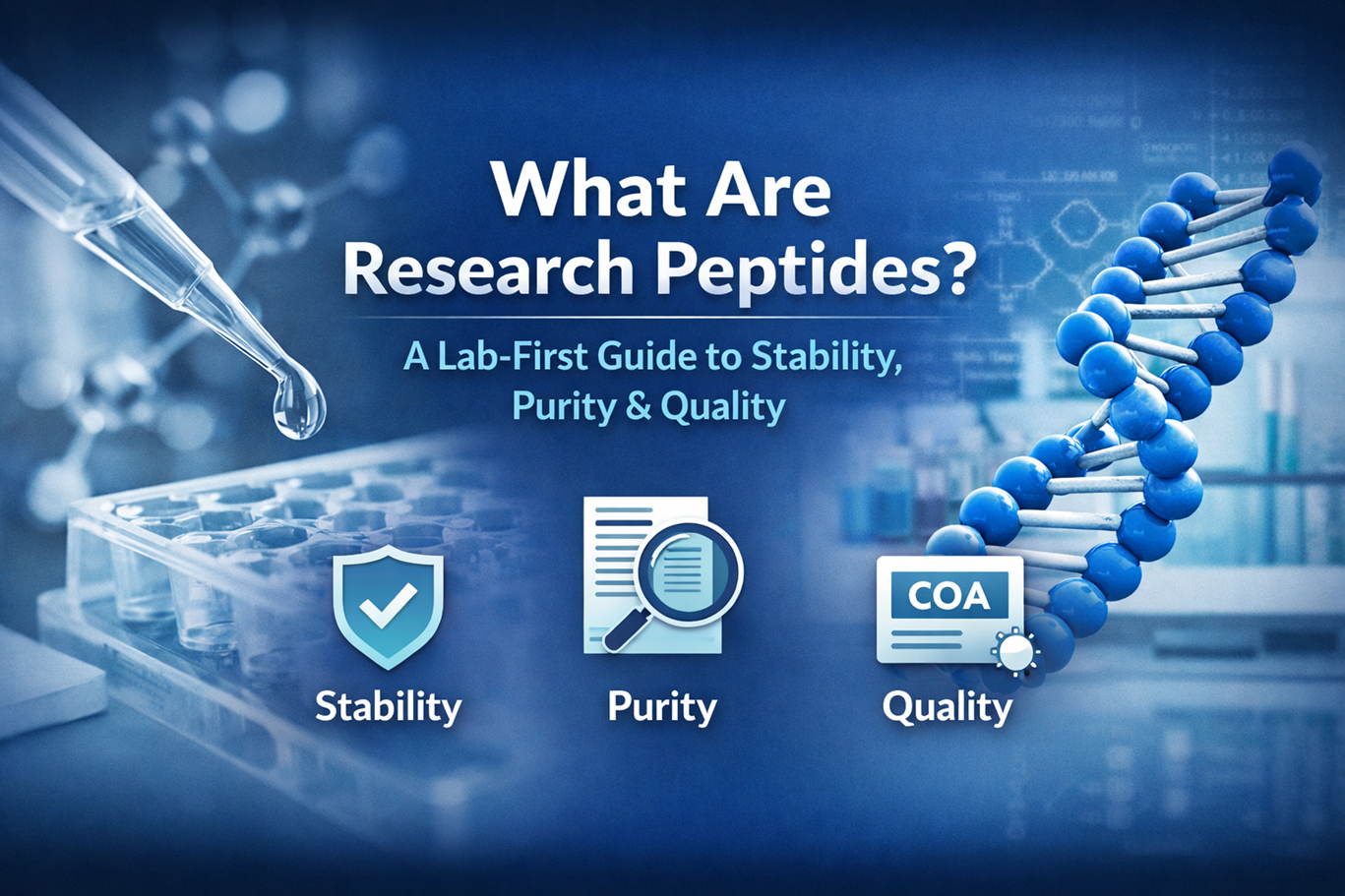
What Are Research Peptides? A Lab-First Guide to Stability, Purity, and Quality
Peptides have become one of the most important classes of molecules in modern biomedical research. Their appeal comes from a combination of high target specificity, broad design flexibility, and the ability to interact with biological systems in precise ways. At the same time, peptide research is not simple. Stability, half-life, formulation, and delivery remain major technical challenges, which is why researchers pay close attention not just to the peptide itself, but to how it is designed, handled, documented, and evaluated.
At Nutritomic Peptides, we believe the best way to approach this category is with a science-first mindset. That means focusing on research context, documentation, analytical quality signals, and proper handling rather than hype. Our site positions peptides as research-use-only materials for in vitro laboratory work, supported by third-party verification, product documentation, and quality-focused workflows.
What is a research peptide?
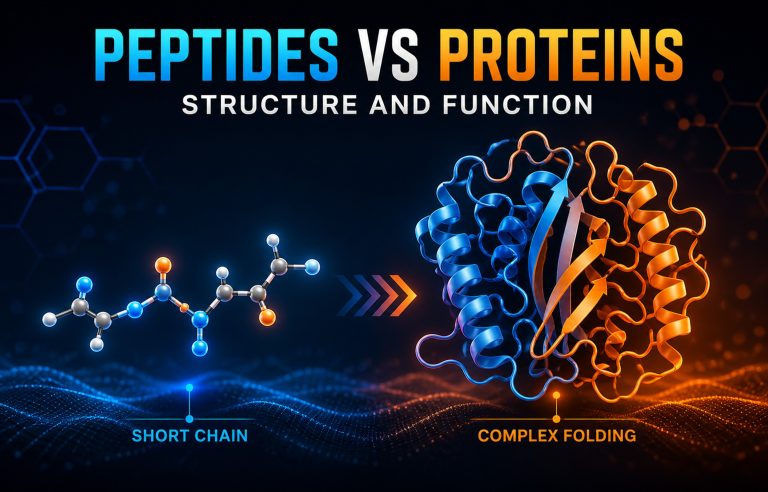
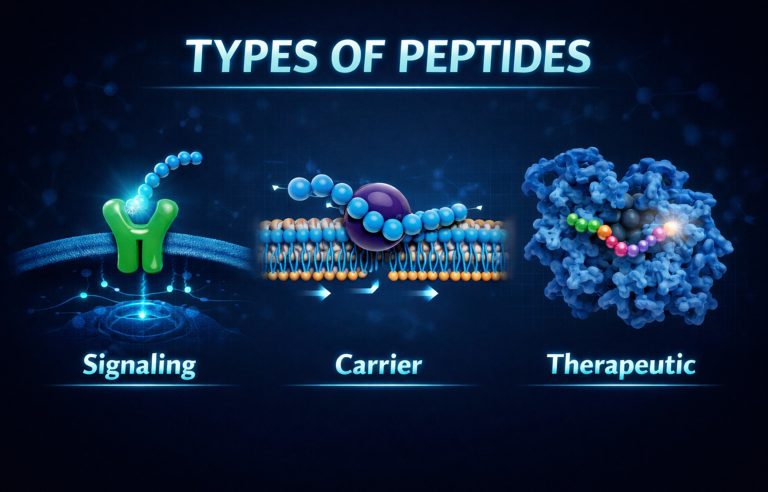
A peptide is a short chain of amino acids linked by peptide bonds. In research settings, peptides are studied because they can serve as signaling molecules, receptor ligands, targeting tools, imaging agents, and design scaffolds for broader biological investigation. Review literature notes that peptide development has advanced substantially thanks to improvements in chemical synthesis, biologic production, structural modification, and analytical technologies.
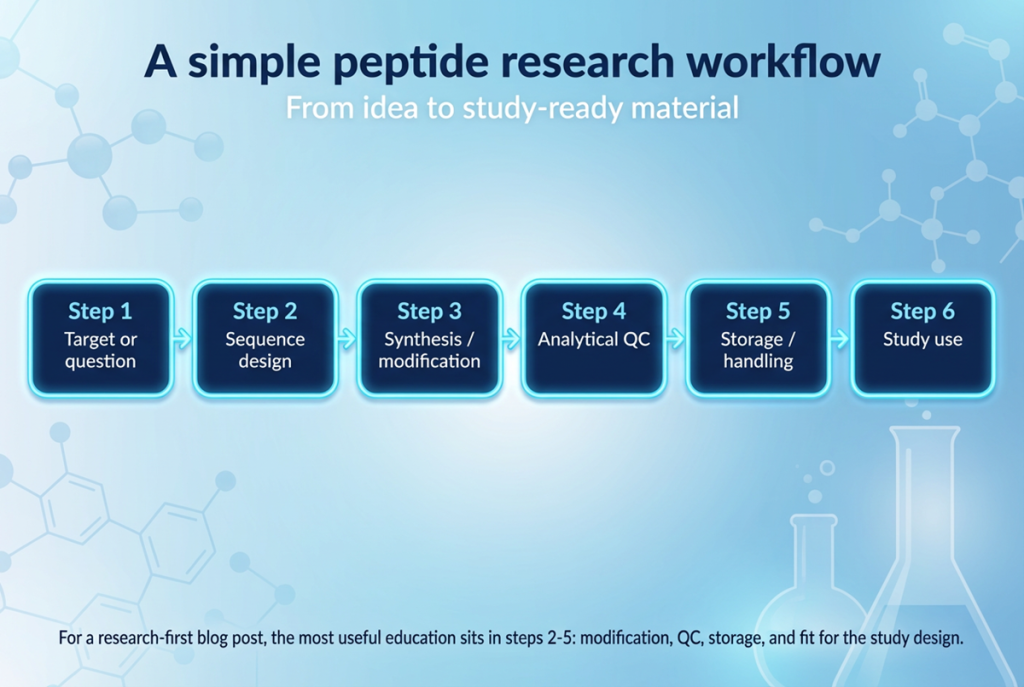
What matters for a research lab is not only what a peptide is called, but how suitable it is for the intended experimental context. Sequence design, molecular modification, formulation strategy, and storage conditions can all influence how a peptide behaves in a study. That is one reason peptide research requires more than a name on a label. It requires context.
Why do peptides matter in research?
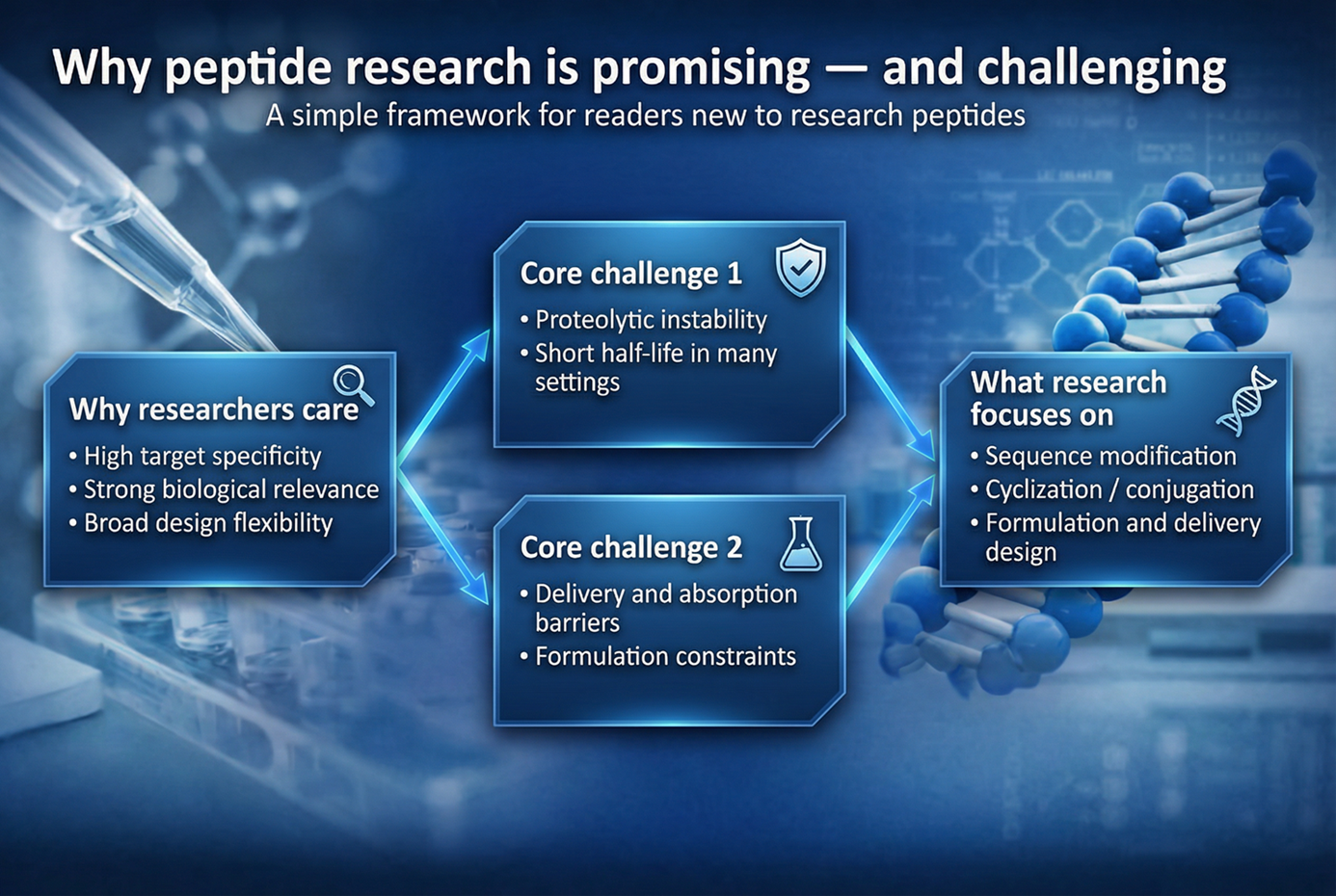
Researchers are interested in peptides because they often combine biologic relevance with a level of selectivity that can be difficult to achieve with broader small-molecule approaches. Recent reviews describe peptides as useful across multiple research areas because they can be engineered to bind specific targets, act as agonists or antagonists, and serve as building blocks for newer therapeutic and diagnostic strategies.
But that promise comes with tradeoffs. One of the clearest themes in the literature is that peptides often face poor metabolic stability and short half-life, along with delivery limitations that can reduce practical performance in biological systems. That is why peptide science has increasingly focused on sequence modification, cyclization, conjugation, and delivery technologies to improve stability and usefulness.
Why stability matters so much
For anyone new to peptide research, stability is one of the first concepts worth understanding. A peptide can be promising on paper and still perform poorly if it degrades too quickly, is difficult to formulate, or is not handled correctly in the lab. Review articles repeatedly identify proteolytic degradation, hydrolysis, oxidation, and limited pharmacokinetic durability as central barriers in peptide development.
This does not mean peptides are unreliable. It means they are highly context-dependent. Researchers often address these issues through rational design choices such as amino acid substitution, cyclization, PEGylation, lipidation, multimerization, and alternative delivery strategies. The larger lesson is simple: peptide research is not only about selecting a compound. It is also about understanding the variables that affect how that compound behaves.
Learn Peptide Research the Simple Way
- Understand how peptides are studied in laboratory settings
- Learn key concepts in purity, structure, and classification
- Built for beginners with no technical background
For educational and research purposes only.
What “quality” should mean in a research workflow
When evaluating a research peptide listing, quality should be understood as more than a single purity number. Purity matters, but it is only one part of a larger documentation and handling picture. A useful research listing should make it easier to answer practical questions such as:
- What is the peptide identity or composition?
- Is the purity standard stated clearly?
- Is there supporting documentation such as a certificate of analysis?
- Are handling and storage expectations clear?
- Is the material explicitly labeled for research use only?
That general framework matches how Nutritomic Peptides presents its catalog: research-use-only positioning, third-party verification, product quality language, and documentation-focused information for buyers working in legitimate research contexts.
How researchers should read a peptide product page
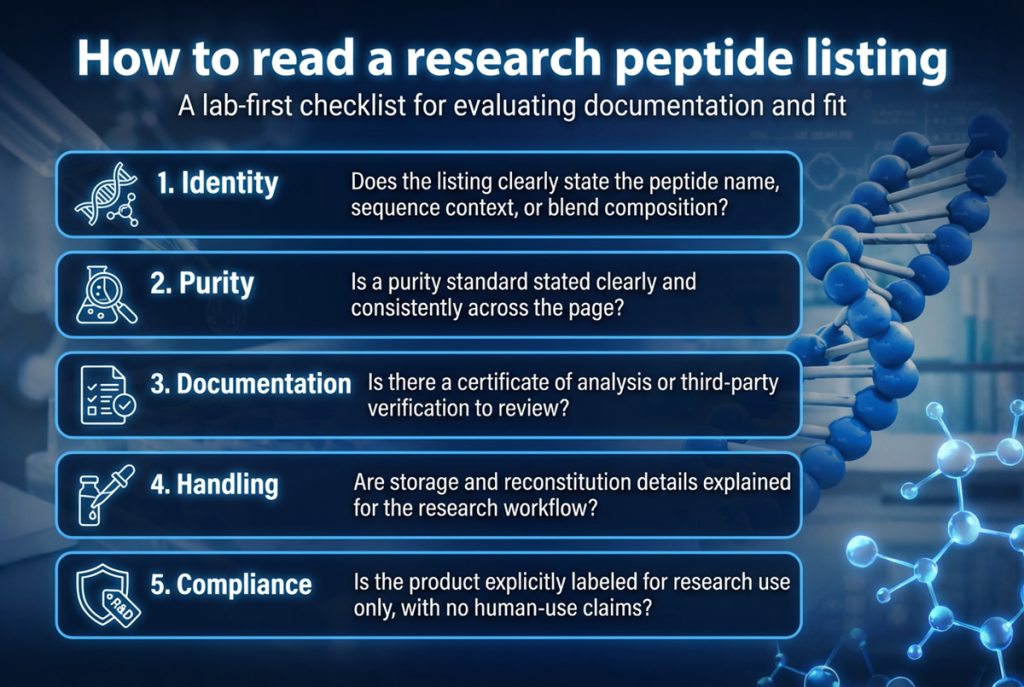
A strong peptide product page should help a researcher evaluate fit for purpose. That begins with identity. The listing should clearly state what the material is, especially when the product is a blend or specialized sequence. Next comes purity language, which should be clear and consistent. After that, documentation matters: analytical support, third-party verification, and a certificate of analysis can all help a lab understand what is being supplied. Finally, storage and handling information should not be treated as a minor detail. For peptides, those factors can materially affect research workflow and reproducibility.
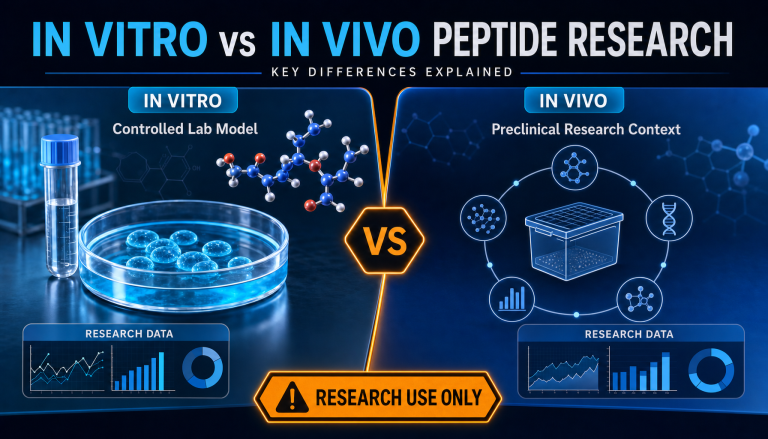
Just as important, the compliance language should be unambiguous. Nutritomic Peptides’s public-facing site repeatedly states that its products are intended strictly for in vitro research and laboratory use only and are not for human or veterinary use. That is the right framing for a research-first peptide business, and it is the right tone for educational content as well.
A better starting point for new readers
A lot of public peptide content jumps too quickly into claims, trends, or compound-specific excitement. The literature suggests a better order of operations. Start with fundamentals. Understand what peptides are. Learn why stability and delivery matter. Review what kinds of modifications researchers use to address limitations. Then look at quality signals and study fit. That sequence helps build a more rigorous foundation for peptide research.
For that reason, the most useful first peptide blog post is not one built around hype. It is one that helps the reader think more clearly about the research process.
Final thoughts
Research peptides are a fast-moving and scientifically important area, but they are best approached with careful attention to design, stability, documentation, and handling. A research-first mindset is not only more credible. It is more useful.
Nutritomic Peptides exists to support that approach with research-use-only materials, quality-focused documentation, and educational content designed to help readers better understand the peptide landscape. For questions about Nutritomic Peptides or our educational resources, contact info@nutritomicpeptides.com.
Key Takeaways
- Research peptides are short amino acid chains studied in laboratory settings for signaling, targeting, imaging, and related scientific applications.
- In peptide research, stability, half-life, formulation, and handling can strongly affect experimental usefulness.
- Quality should be evaluated through identity, purity language, documentation, storage guidance, and RUO labeling — not just a single purity claim.
- A strong peptide product page helps researchers assess fit for purpose through clear composition, analytical support, and compliance language.
- A science-first approach focuses on context, documentation, and experimental suitability rather than hype.
Looking to Better Understand Peptide Research?
- Learn the core concepts behind peptide research
- Understand stability, purity, and documentation basics
- See how peptides are studied in research settings
For educational and research purposes only.
What Comes Next
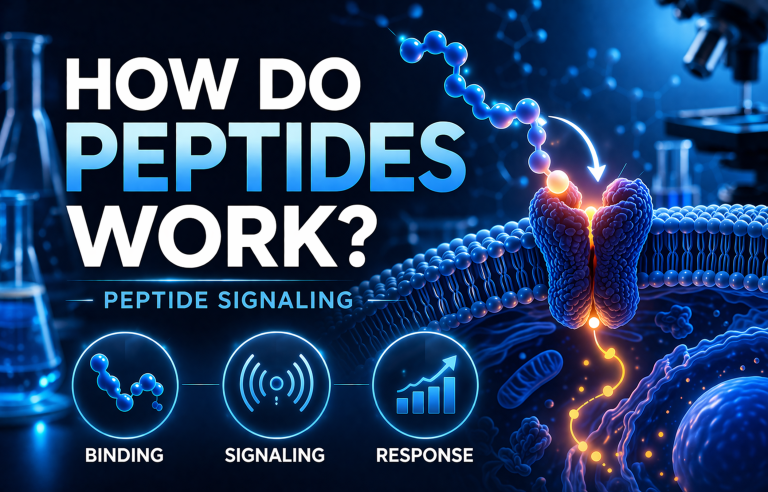
Now that we’ve covered what research peptides are and why stability, quality, and documentation matter, the next step is understanding how peptides actually work in research settings.
Next up: How Do Peptides Work? The Science of Peptide Signaling
Frequently Asked Questions
Research peptides are short chains of amino acids studied in laboratory settings for their biological activity, signaling behavior, and experimental usefulness. They are typically used in vitro or in controlled research environments.
Peptides are important because they can interact with biological systems in highly specific ways. Researchers study them for signaling, targeting, binding interactions, and experimental modeling across multiple scientific fields.
Stability matters because peptides can degrade, oxidize, or lose structure under certain conditions. Proper handling, formulation, and storage are critical for maintaining consistency in experimental work.
Quality involves more than purity. It includes identity confirmation, analytical documentation, storage guidance, formulation clarity, and proper research-use-only labeling.
No. Research peptides are intended for laboratory research purposes only and are not approved for human or veterinary use.
Research Use Only Disclaimer
This content is provided for educational and informational purposes only.
- For research use only
- Not intended for human or veterinary use
- Not intended to diagnose, treat, cure, or prevent any disease or condition
PubMed References
This article is based on peer-reviewed research indexed in PubMed.
- Fosgerau K, Hoffmann T. Peptide therapeutics: current status and future directions. Drug Discov Today. 2015. PMID: 25999327.
- Craik DJ, Fairlie DP, Liras S, Price D. The future of peptide-based drugs. Chem Biol Drug Des. 2013. PMID: 23387334.
- Lau JL, Dunn MK. Therapeutic peptides: historical perspectives and future directions. Bioorg Med Chem. 2018. PMID: 29254732.
- Kaspar AA, Reichert JM. Future directions for peptide therapeutics development. Drug Discov Today. 2013. PMID: 24012637.
- Uhlig T, Kyprianou T, Martinelli FG, et al. The emergence of peptides in drug discovery. Nat Rev Drug Discov. 2014. PMID: 25230569.