If you missed it, start here: What Does Research Use Only Really Mean? This article naturally leads us to explore the next important question in peptide research: understanding the differences between in vitro and in vivo peptide research models. Grasping these distinctions is essential for interpreting laboratory and preclinical research findings accurately.
The next logical question is: What are the key differences between in vitro and in vivo peptide research?
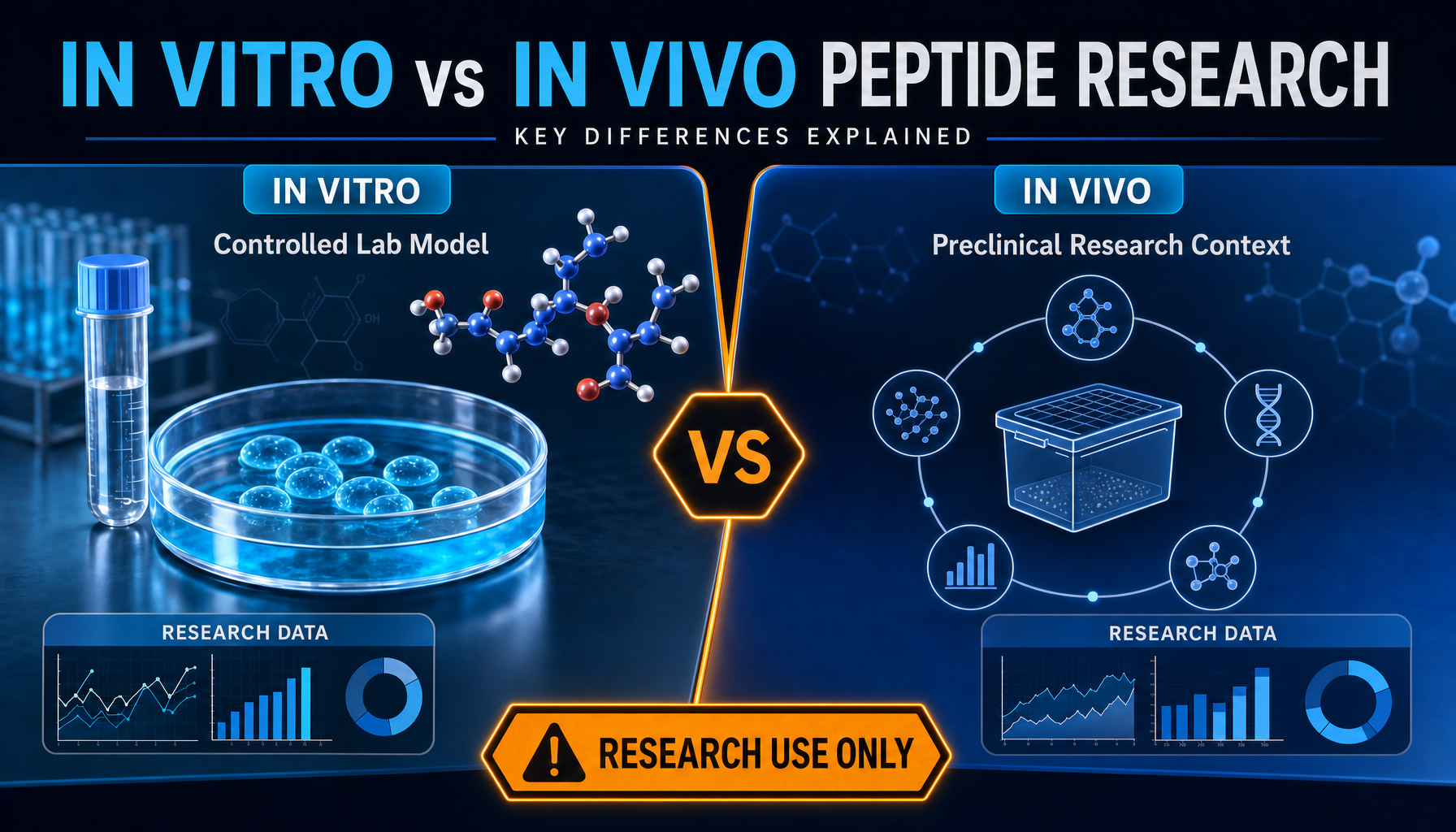
Research literature often distinguishes between in vitro and in vivo models as foundational approaches in peptide research. Understanding how these models differ helps clarify the context in which data is generated and interpreted. This article addresses the core differences, advantages, and limitations of each model within laboratory and preclinical research settings.
By exploring these distinctions, researchers and beginners alike can better appreciate the scope and applicability of peptide studies conducted under each model.
Main concept foundation
In vitro and in vivo research models serve complementary roles in peptide research. In vitro studies are conducted outside of living organisms, typically in controlled laboratory environments such as cell cultures or biochemical assays. These models enable precise manipulation and observation of molecular interactions and cellular responses.
In contrast, in vivo studies involve research conducted within living organisms, such as animal models, to observe complex biological processes in a systemic context. These models provide insights into pharmacokinetics, biodistribution, and physiological effects that cannot be fully replicated in vitro.
- In vitro: Controlled, simplified environment outside living organisms
- In vivo: Complex, systemic environment within living organisms
- Each model offers unique insights relevant to different stages of peptide research
In Vitro Peptide Research: Controlled Laboratory Models
In vitro peptide research focuses on experiments performed in isolated systems such as cultured cells, tissue slices, or biochemical assays. This approach allows researchers to study peptide interactions, stability, and mechanisms at a molecular or cellular level under tightly regulated conditions. Research suggests that in vitro models are invaluable for initial screening and mechanistic studies before progressing to more complex systems.
These models provide high reproducibility and control over experimental variables, making them ideal for hypothesis testing and detailed analysis of peptide behavior.
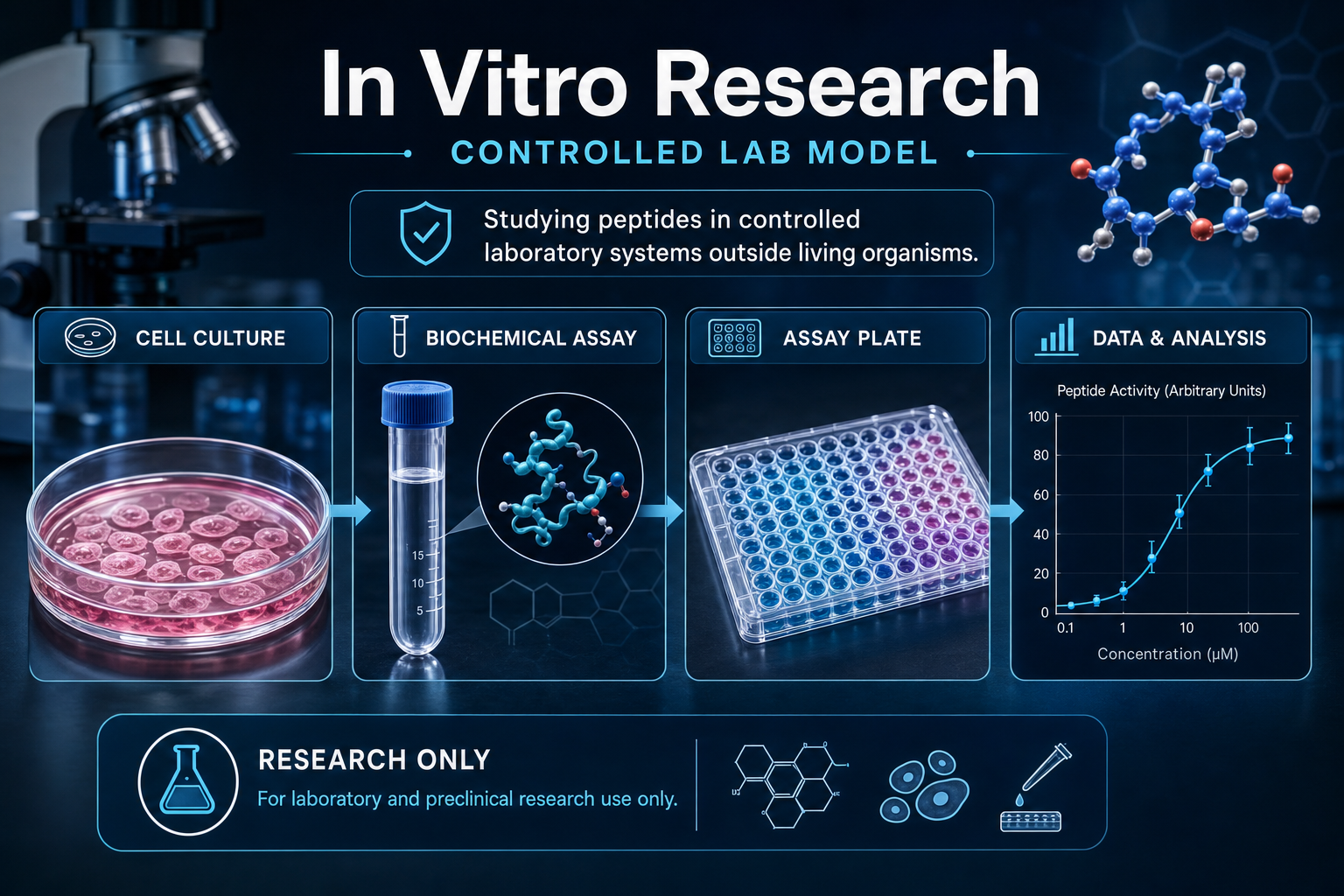
However, in vitro models have inherent limitations. They lack the full biological complexity of living organisms, including interactions with immune, metabolic, and other physiological systems. Studies indicate that findings from in vitro research must be interpreted with caution and validated through complementary in vivo studies.
- Cell culture assays to study peptide-cell interactions
- Biochemical assays for peptide stability and binding
- High control over experimental variables and conditions
Learn Peptide Research the Simple Way
- Understand how peptides are studied in laboratory settings
- Learn the core concepts behind peptide research
- Start with a beginner-friendly guide — no technical background required
For educational and research purposes only.

In Vivo Peptide Research: Whole Organism Models
In vivo peptide research involves studying peptides within living organisms, commonly using animal models such as rodents. This approach allows researchers to observe how peptides behave in the context of whole-body physiology, including absorption, distribution, metabolism, and excretion. Preclinical research often relies on in vivo models to assess peptide pharmacodynamics and potential biological effects in complex systems.
Research literature highlights that in vivo studies provide critical insights that cannot be captured by in vitro models alone, particularly regarding systemic responses and interactions.
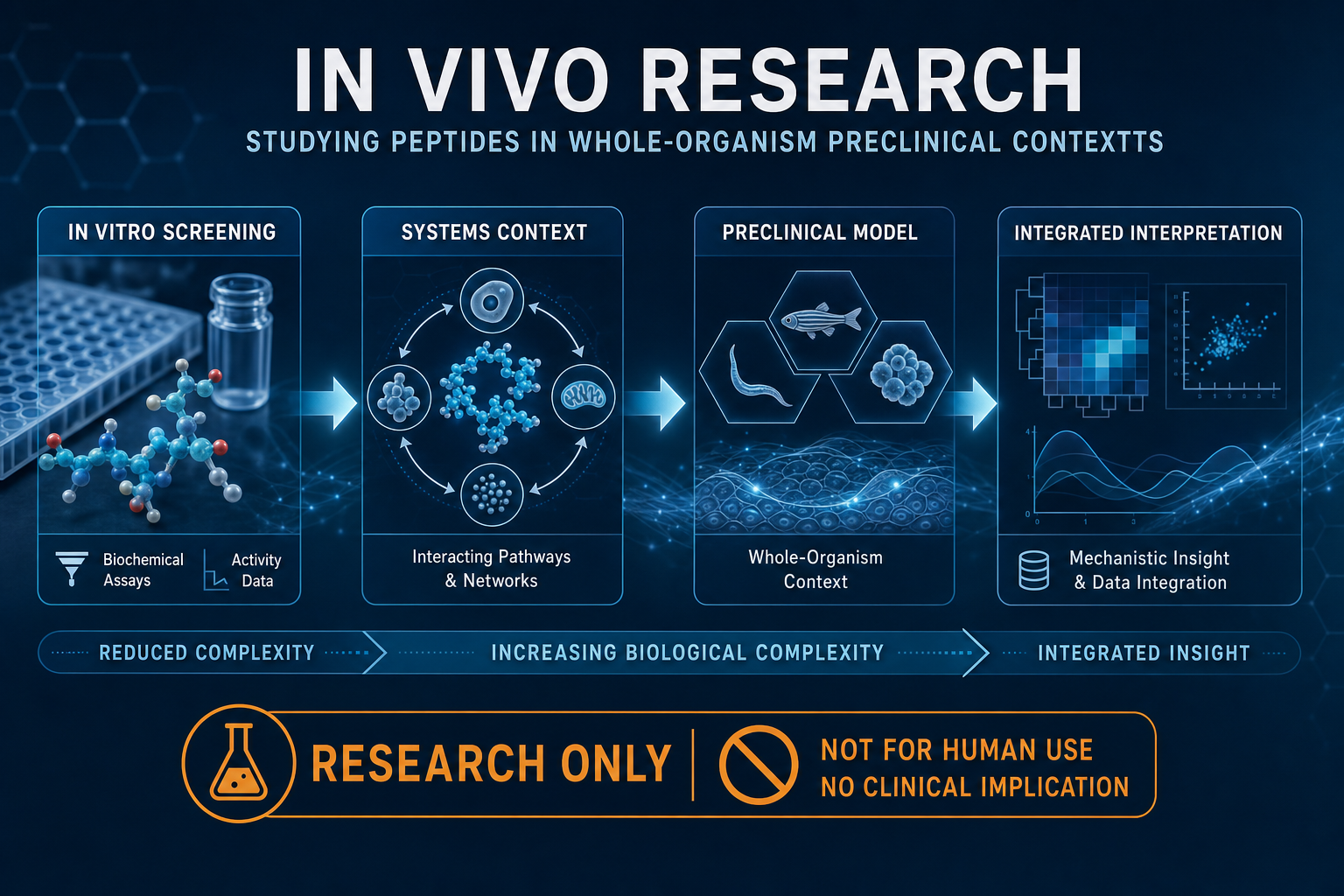
Despite their advantages, in vivo models are more variable and complex, requiring careful experimental design and ethical considerations. They are generally more resource-intensive and less amenable to high-throughput screening compared to in vitro methods.
- Animal models to study systemic peptide effects
- Evaluation of pharmacokinetics and biodistribution
- Integration of physiological and metabolic factors
Bridging the Gap: Ex Vivo and Hybrid Models
Between in vitro and in vivo approaches, ex vivo and hybrid models provide additional research contexts. Ex vivo studies use tissues or organs extracted from organisms to examine peptide effects in a controlled yet biologically relevant environment. These models help bridge the gap by maintaining some physiological complexity while allowing experimental control.
Such models are increasingly used in preclinical research to validate findings from in vitro systems before moving to full in vivo studies.
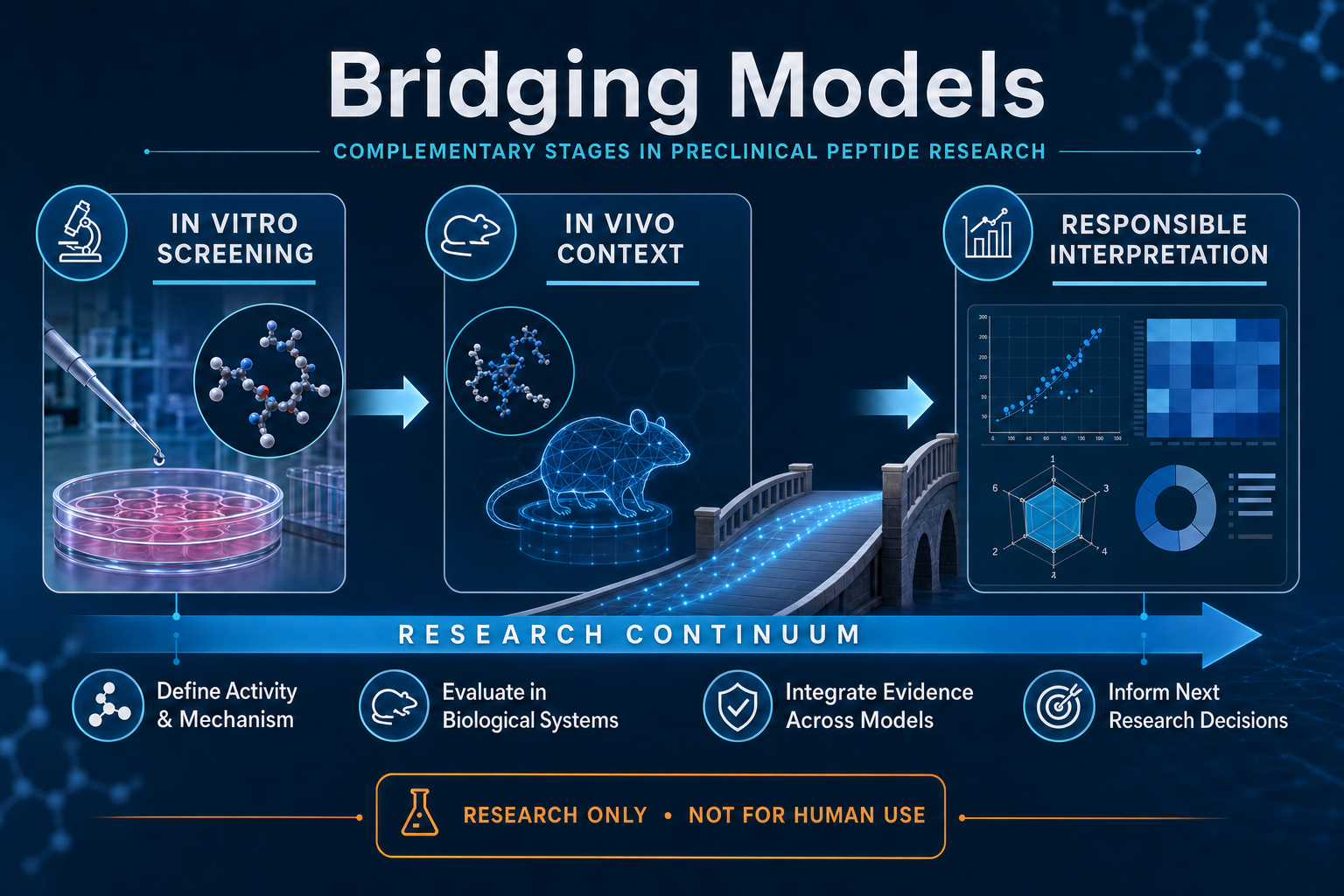
Ex vivo models offer a balance of controllability and biological relevance, supporting a more comprehensive understanding of peptide behavior across research contexts.
- Tissue explants to study localized peptide effects
- Organ perfusion systems preserving physiological function
- Intermediate complexity between in vitro and in vivo
How These Ideas Work Together
Understanding the distinctions and complementarities of in vitro, in vivo, and ex vivo peptide research models is essential for interpreting research findings accurately. Each model contributes unique insights: in vitro studies clarify molecular mechanisms, in vivo models reveal systemic interactions, and ex vivo approaches offer intermediate complexity.
Integrating data across these models enhances the robustness of peptide research conclusions and supports informed decision-making in preclinical research contexts.
Key Takeaways
- In vitro models provide controlled, simplified environments for mechanistic peptide studies.
- In vivo models capture complex systemic interactions within living organisms.
- Ex vivo models offer intermediate biological relevance with experimental control.
- Each model has distinct advantages and limitations important for research interpretation.
- Combining multiple models strengthens preclinical peptide research findings.
What Comes Next
The next article in this series continues to build on foundational peptide research concepts, exploring advanced topics related to peptide applications and research methodologies. Stay tuned for the upcoming discussion in the series.
Frequently Asked Questions
In vitro refers to experiments conducted outside of living organisms, typically in controlled laboratory environments such as cell cultures or biochemical assays.
In vivo models allow researchers to observe peptide behavior within living organisms, capturing complex physiological interactions that cannot be replicated in vitro.
Yes, due to differences in complexity and biological context, results from in vitro studies may not always predict in vivo outcomes accurately, highlighting the need for complementary approaches.
Ex vivo models use tissues or organs outside the organism to provide a controlled yet biologically relevant environment, bridging the gap between in vitro and in vivo studies.
Research Use Only Disclaimer
This content is provided for educational and informational purposes only.
- For research use only
- Not intended for human or veterinary use
- Not intended to diagnose, treat, cure, or prevent any disease or condition