If you read our earlier post, “What Are Research Peptides?”, the next logical question is simple: how do peptides actually work?
How Do Peptides Work?
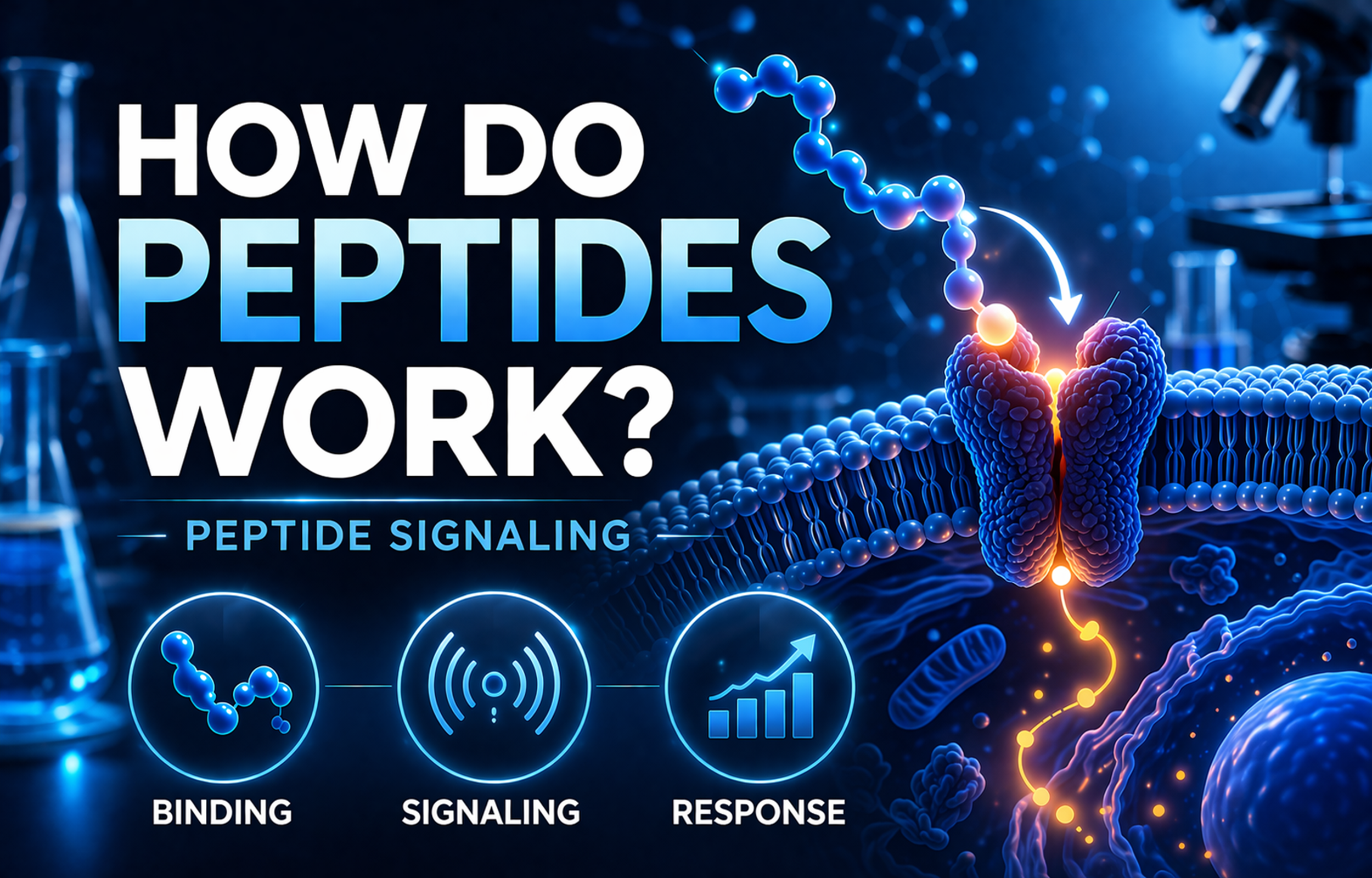
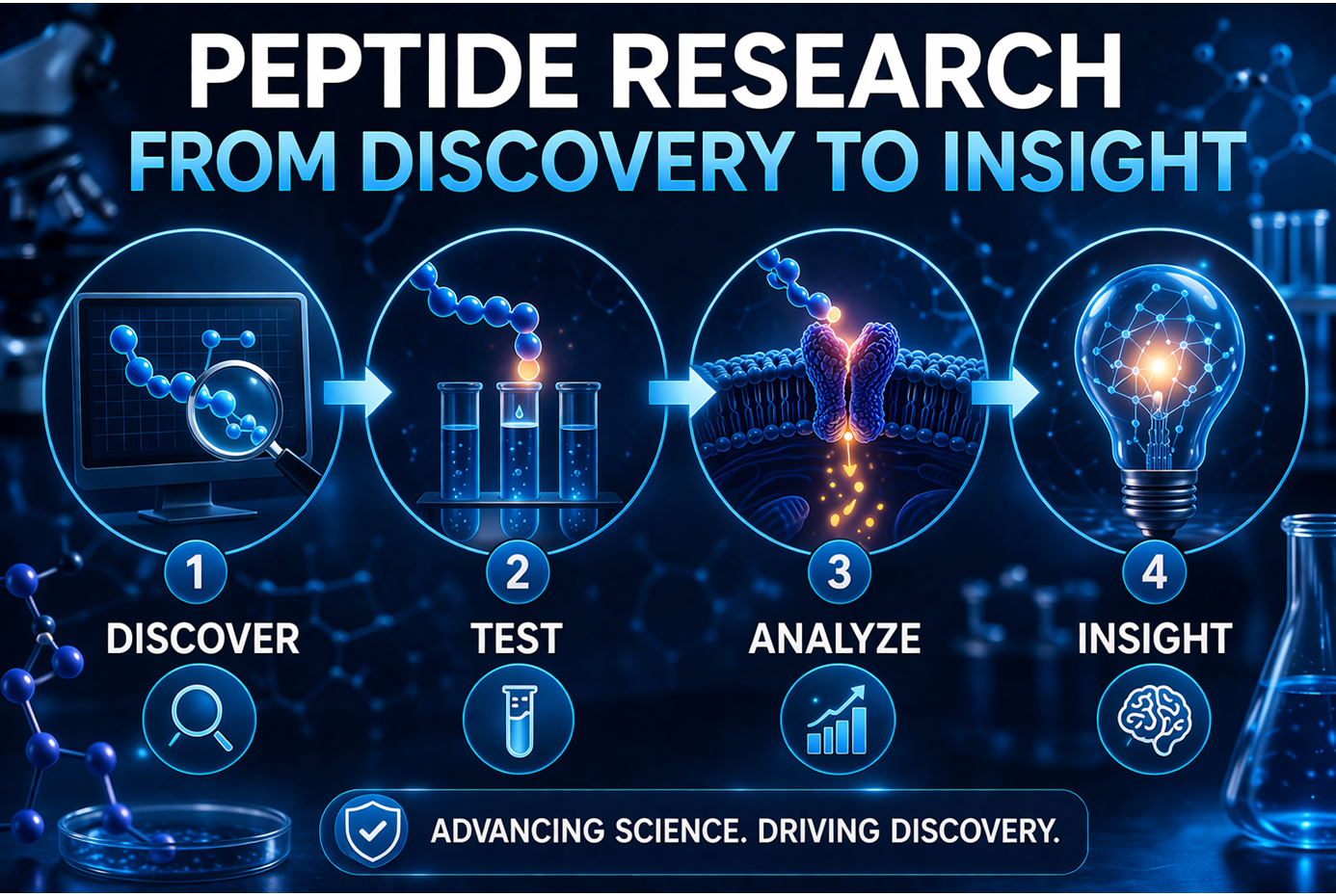
Peptides work by binding to specific receptors on cells and triggering internal signaling pathways. In research settings, this process allows researchers to study how cells communicate and respond to molecular signals.
That short answer only explains the surface. What makes peptide signaling interesting is what happens after binding — because a small interaction at the cell surface can lead to a much larger response inside the cell.
Peptide Signaling, in Simple Terms
At a basic level, peptide signaling is a form of cellular communication. In laboratory settings, peptides are often studied as signaling molecules because they can interact with receptors and help trigger measurable changes inside cells.
You can think of the peptide as the signal and the receptor as the structure that recognizes it. Once the peptide binds, the receptor changes in a way that starts passing information inward through the cell.
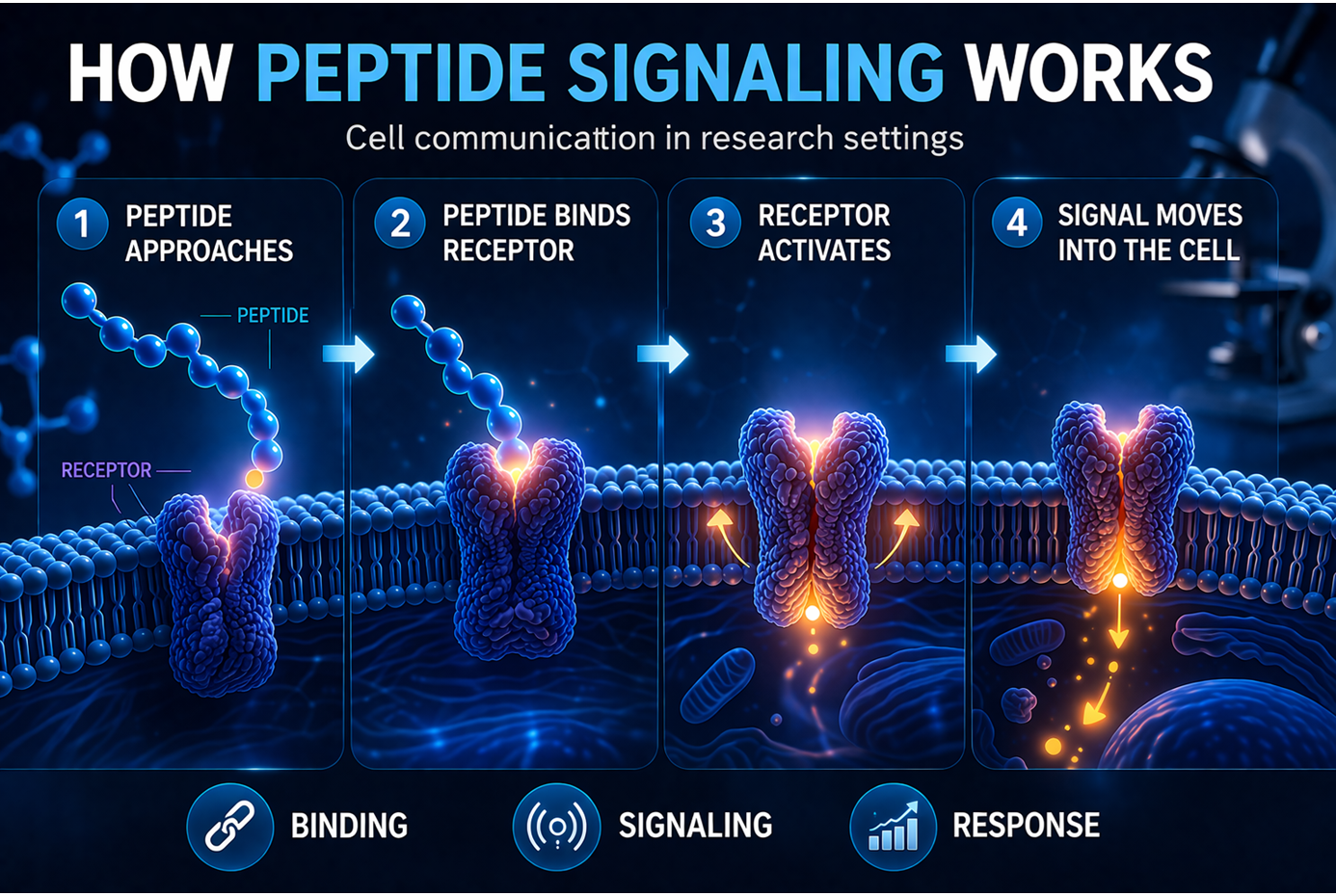
- A peptide approaches a receptor
- The peptide binds to the receptor
- The receptor becomes activated
- A signal moves into the cell
How Peptides Interact with Receptors
Most peptide research focuses on receptor interaction. In many studies, peptides are observed binding to receptors located on the cell membrane, where they begin a signaling process that researchers can track and measure.
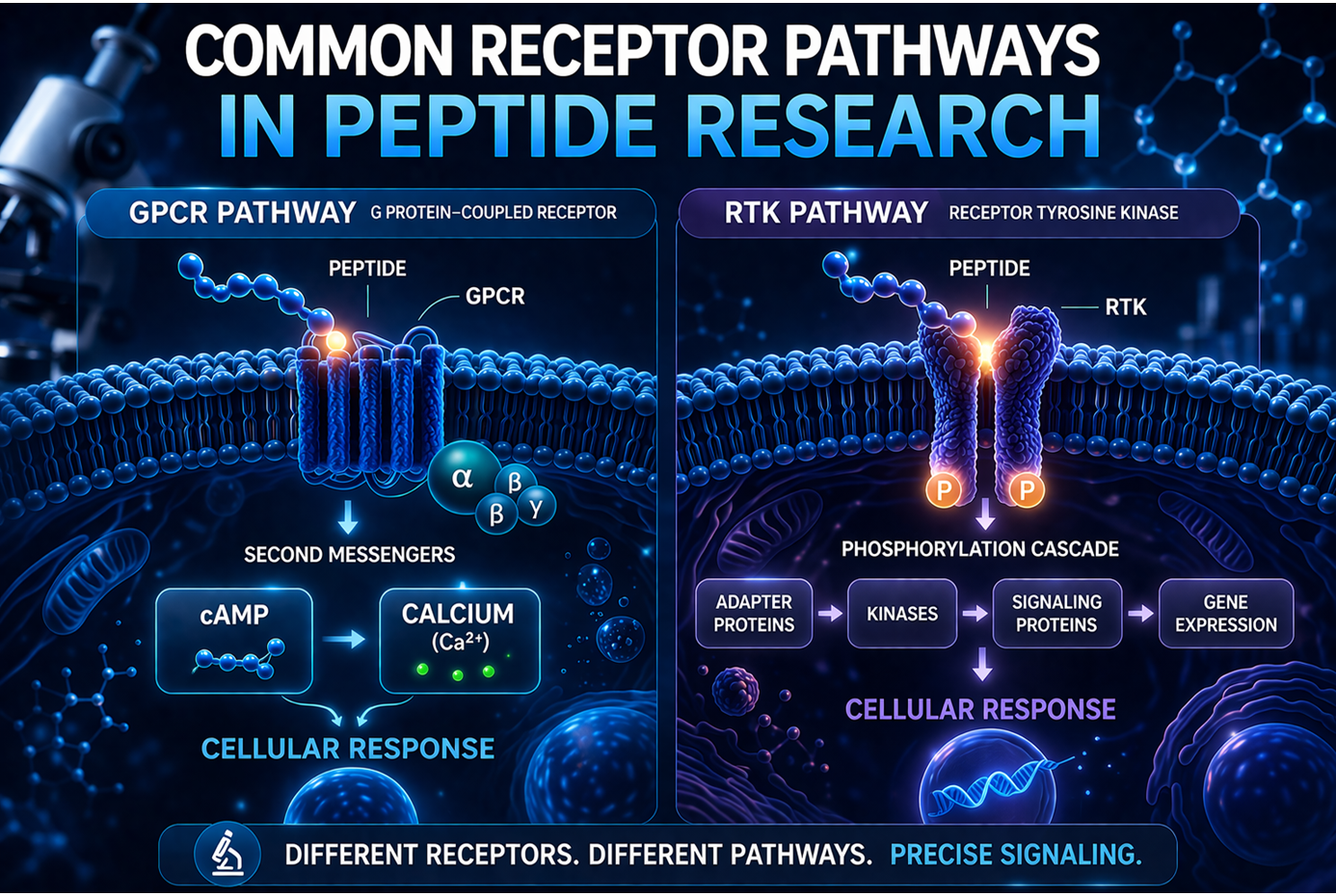
Different peptides interact with different receptor systems. Two commonly studied examples are G protein-coupled receptors, often called GPCRs, and receptor tyrosine kinases. While they do not work in exactly the same way, both can turn an outside signal into internal cellular activity.
- GPCRs
- Receptor tyrosine kinases
- Receptor binding starts downstream signaling
Learn Peptide Research the Simple Way
- Understand how peptides are studied in laboratory settings
- Learn the core concepts behind peptide research
- Start with a beginner-friendly guide — no technical background required
For educational and research purposes only.

What Happens After Binding?
Once a peptide binds to its receptor, the signaling process moves inward. This is where the biology becomes more complex, because the original interaction can activate multiple steps inside the cell.
In laboratory settings, researchers often measure downstream effects rather than watching the peptide itself in real time. These readouts help show whether a signaling pathway has been activated.
- Calcium
- cAMP
- Phosphorylation
- Gene expression
Why Structure Matters
A peptide’s structure plays a major role in how it behaves. Because peptides are made from amino acids arranged in a specific sequence, even a small change in structure can affect how strongly the peptide binds, how stable it is, and what kind of signal it produces.
This structure-function relationship is one reason peptides are so useful in research. They give scientists a more precise way to study how specific molecular interactions influence cellular behavior.
In Vitro Research vs Biological Complexity
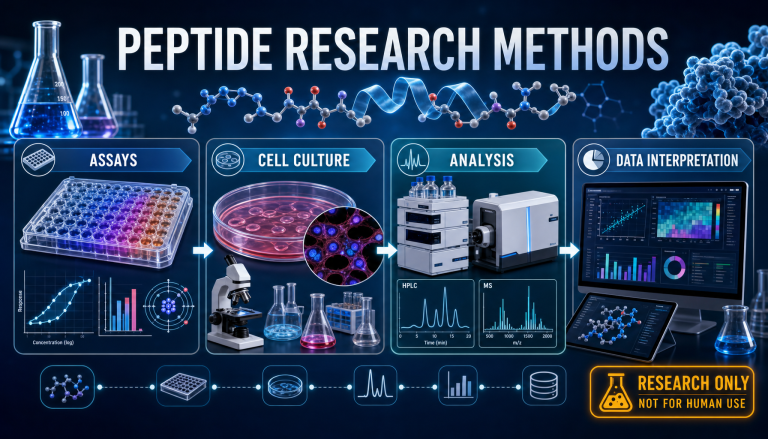
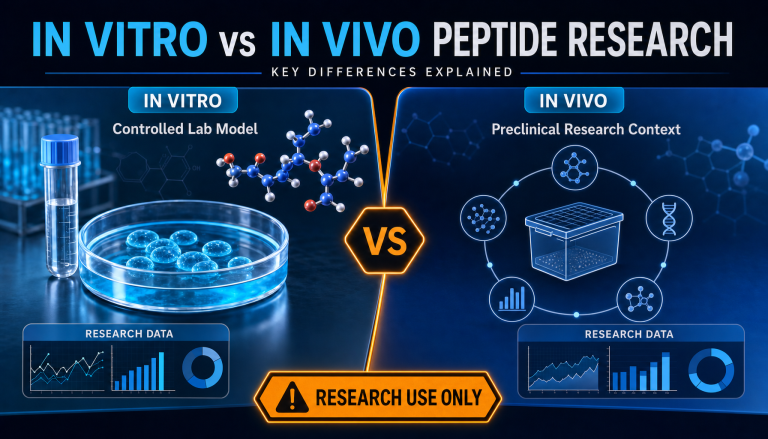
Most peptide research takes place in controlled environments such as cell cultures, assays, and other laboratory models. These systems make it easier to isolate mechanisms and study signaling pathways in a focused way.
That does not mean those findings automatically describe what happens in more complex biological systems. For that reason, peptide research is best understood in the context of preclinical and laboratory-based study.
Key Takeaways
- Peptides are often studied as signaling molecules in research settings
- They usually work by binding to specific receptors on cells
- Receptor binding can trigger internal signaling pathways
- Researchers often measure downstream readouts such as calcium, cAMP, phosphorylation, and gene expression
- A peptide’s structure strongly affects how it behaves in laboratory models
Ready to Go Deeper Into Peptide Research?
- Learn the core concepts behind peptide research
- Understand key factors like stability, purity, and documentation
- See how peptides are studied and evaluated in research settings
For educational and research purposes only.
What Comes Next
Now that we’ve covered how peptides work at a basic level, the next step is to look at how researchers commonly categorize them.
Next up: Types of Peptides: Signaling, Carrier, and Therapeutic Peptides Explained
Frequently Asked Questions
Peptides work by binding to specific receptors on cells and triggering internal signaling pathways. In research settings, this allows scientists to study how cells respond to molecular signals.
Peptide signaling refers to how peptides act as messengers between cells. When a peptide binds to a receptor, it can activate a chain of events inside the cell that researchers can measure.
After binding, the signal moves into the cell and activates internal pathways. Researchers often measure downstream effects such as calcium signaling, cAMP levels, or phosphorylation.
A peptide’s structure determines how it binds to a receptor and how it behaves in research settings. Even small changes in structure can affect signaling activity and stability.
Most peptide research is conducted in controlled laboratory settings such as cell cultures and experimental models. These studies are designed to understand mechanisms rather than human use outcomes.
Research Use Only Disclaimer
This content is provided for educational and informational purposes only.
- For research use only
- Not intended for human or veterinary use
- Not intended to diagnose, treat, cure, or prevent any disease or condition
PubMed References
This article is based on peer-reviewed research indexed in PubMed.
- Uddin MMN, et al. T cell receptor (TCR) signaling in health and disease. Signal Transduct Target Ther. 2021. PMID: 34897277.
- Guan C, et al. Calcium Mobilization Assays in GPCR Drug Discovery and Receptor Deorphanization. Methods Mol Biol. 2011. PMID: 21922422.
- Yuan T, et al. Evidence supporting a passive role for the insulin receptor transmembrane domain in insulin-dependent signal transduction. J Biol Chem. 1991. PMID: 2033070.
- Pattarozzi A, et al. Complex roles of cAMP-PKA-CREB signaling in cancer. Int J Mol Sci. 2020. PMID: 33292604.
- Sorensen AT, et al. Gene therapy mediated seizure suppression in Genetic Generalised Epilepsy: Neuropeptide Y overexpression in a rat model. Neurobiol Dis. 2018. PMID: 29414380.