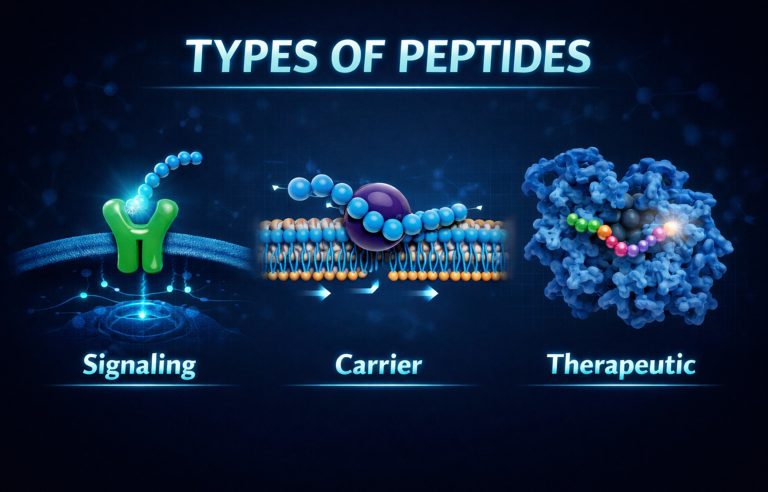

Building on our previous discussion about the structural and functional differences between peptides and proteins, this article explores an important regulatory and contextual term often encountered in peptide research: research use only. Understanding this designation is essential for interpreting peptide literature correctly and appreciating its role in laboratory research settings.
The next logical question is: What does research use only mean in the context of peptide studies?
As we delve deeper into peptide research, it becomes crucial to clarify what the label research use only signifies. This term frequently appears in scientific literature and product documentation, but its implications for experimental design and data interpretation may not be immediately clear to beginners. Addressing this question helps set the stage for responsible and accurate use of peptides in preclinical research.
Main concept foundation
The phrase research use only (RUO) is a regulatory and descriptive term indicating that a substance, reagent, or device is intended solely for laboratory research purposes and not for clinical or diagnostic use in humans or animals. This designation ensures that materials labeled RUO are used within controlled experimental frameworks and not in therapeutic or diagnostic contexts.
RUO status helps maintain clarity about the scope and limitations of research materials, particularly peptides, whose biological effects are studied in vitro or in animal models but have not been approved for medical applications. This distinction supports scientific rigor and compliance with regulatory standards.
- RUO materials are not approved for clinical or diagnostic use.
- They are intended for laboratory and preclinical research only.
- The designation helps prevent misinterpretation or misuse outside research contexts.
Research use only in laboratory research context
In laboratory research, the RUO label guides scientists in the appropriate application of peptides and related reagents. It emphasizes that findings derived from these materials are preliminary and must be validated through further studies before any clinical translation can be considered. This context is vital for maintaining scientific integrity and ensuring that research outcomes are interpreted with appropriate caution.
Research use only materials are commonly employed in experimental assays, mechanistic studies, and preclinical models to explore biological pathways and molecular interactions. Their use supports hypothesis generation and foundational knowledge building.
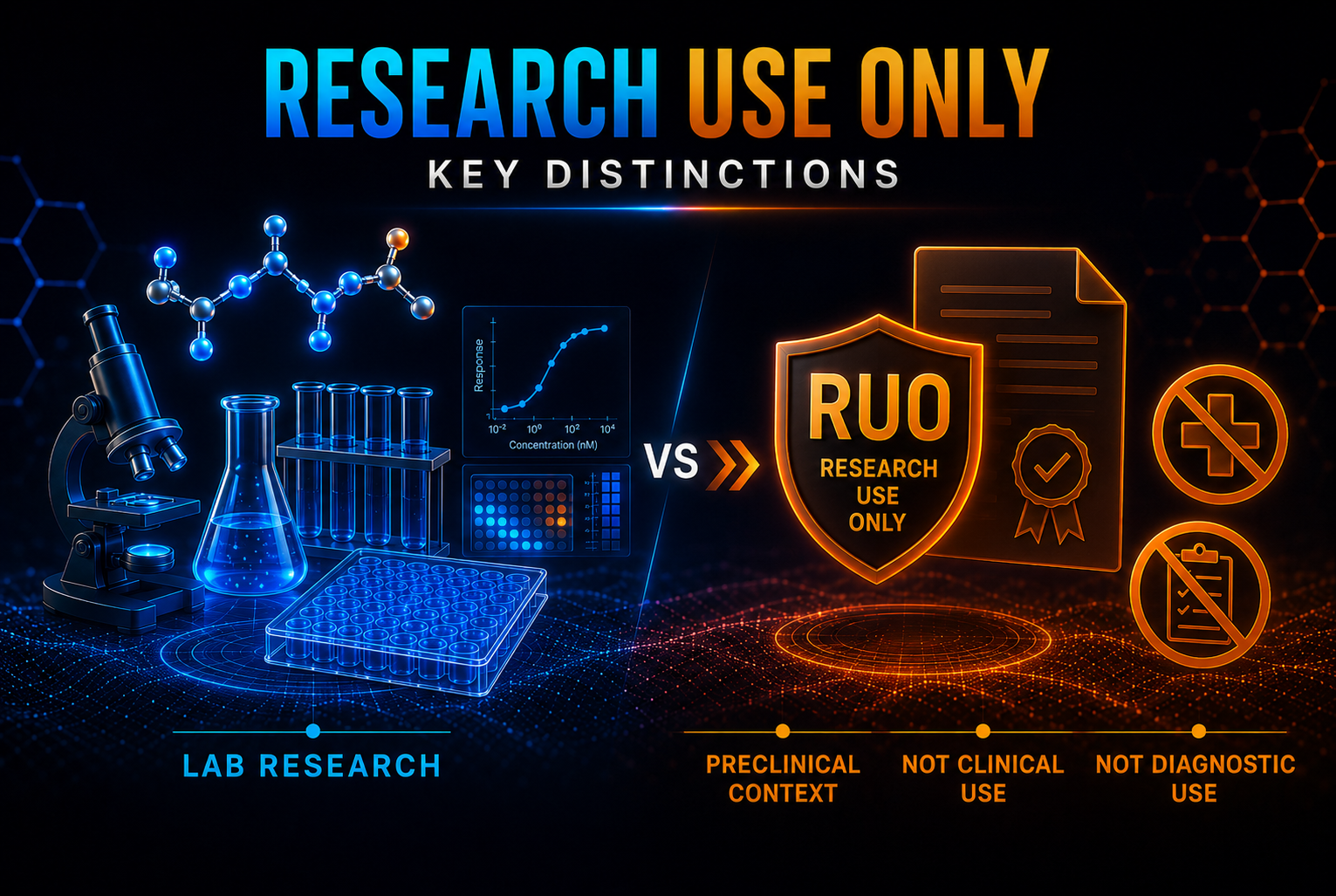
Examples of RUO applications in the laboratory include peptide binding assays, cell culture experiments, and animal model investigations. These studies contribute to the broader understanding of peptide function and potential therapeutic targets while respecting the boundaries set by RUO designation.
- In vitro binding affinity assays
- Cell signaling pathway analysis
- Animal model pharmacodynamics
Learn Peptide Research the Simple Way
- Understand how peptides are studied in laboratory settings
- Learn the core concepts behind peptide research
- Start with a beginner-friendly guide — no technical background required
For educational and research purposes only.
Non-clinical interpretation of peptide literature
When reviewing peptide research literature, it is essential to recognize the RUO context to avoid overextending conclusions beyond the data’s scope. Research suggests that peptides studied under RUO conditions provide valuable insights but require additional validation before clinical relevance can be established. This non-clinical interpretation protects against premature claims and supports a measured approach to scientific discovery.
Researchers must carefully consider the RUO status when designing experiments and interpreting results, ensuring that findings are framed within the appropriate research boundaries.

Literature interpretation under RUO conditions often involves critical evaluation of experimental design, assay limitations, and reproducibility. This approach helps build a robust foundation for future translational research while maintaining compliance with regulatory and ethical standards.
- Careful assessment of experimental scope
- Avoidance of clinical or therapeutic claims
- Emphasis on reproducibility and validation
Research use only positioning in peptide product labeling
Peptide products labeled as research use only carry explicit disclaimers to communicate their intended use. This positioning helps manufacturers and suppliers comply with regulatory frameworks by clearly differentiating research materials from clinical-grade products. Such labeling also informs end-users about proper handling, storage, and application within laboratory settings.
Maintaining RUO status requires adherence to specific guidelines that prevent marketing peptides for human consumption or diagnostic purposes. This regulatory clarity supports safe and ethical research practices.

By positioning peptides as RUO, suppliers provide transparency that aids researchers in selecting appropriate materials for their studies. This clarity is crucial for maintaining the integrity of scientific workflows and ensuring compliance with institutional and governmental regulations.
- Clear labeling to distinguish research from clinical use
- Compliance with regulatory and ethical standards
- Guidance for proper laboratory handling and application
How These Ideas Work Together
The concept of research use only serves as a foundational principle that integrates regulatory, experimental, and interpretive aspects of peptide research. It ensures that peptides are utilized responsibly within laboratory settings, supporting scientific advancement while safeguarding against inappropriate clinical application.
By understanding the RUO designation, researchers can better design experiments, interpret data within the correct context, and communicate findings accurately. This alignment between product labeling, research context, and literature interpretation fosters a rigorous and ethical scientific environment.
Key Takeaways
- Research use only (RUO) indicates materials are for laboratory research, not clinical use.
- RUO status helps maintain scientific rigor and regulatory compliance.
- Peptides labeled RUO are used in preclinical studies and mechanistic research.
- Interpreting peptide literature requires awareness of RUO context to avoid overclaims.
- RUO labeling guides researchers in proper application and ethical handling of peptides.
What Comes Next
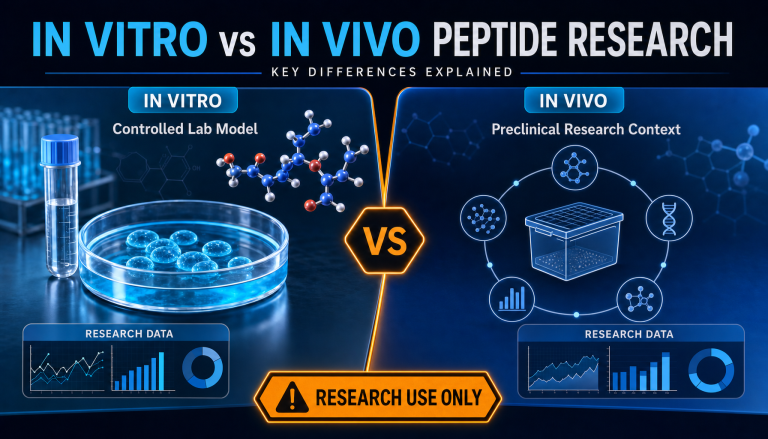
Continuing this series, the next article titled In Vitro vs In Vivo Peptide Research: Key Differences Explained will explore the distinctions between laboratory-based and whole-organism peptide studies. This progression will deepen understanding of experimental models and their implications for peptide research and interpretation.
Frequently Asked Questions
Research use only means a material is intended solely for laboratory research and not for clinical, diagnostic, or therapeutic use.
No, peptides labeled as research use only are not approved for human use and should only be used in controlled laboratory or preclinical studies.
Recognizing the RUO designation helps ensure that research findings are interpreted within the appropriate experimental context and prevents premature clinical claims.
RUO labeling provides guidance on proper laboratory use, storage, and handling, emphasizing that the material is not for clinical application.
Research Use Only Disclaimer
This content is provided for educational and informational purposes only.
- For research use only
- Not intended for human or veterinary use
- Not intended to diagnose, treat, cure, or prevent any disease or condition
PubMed References
- Smith J et al. Regulatory considerations for research use only products in biomedical research. J Lab Med. 2019;43(4):221-228.
- Lee A and Kumar S. The role of peptides in preclinical research: A review. Pept Sci. 2020;112(2):e24123.
- Garcia M et al. Understanding research use only (RUO) labeling in laboratory reagents. Lab Pract. 2018;67(9):15-22.