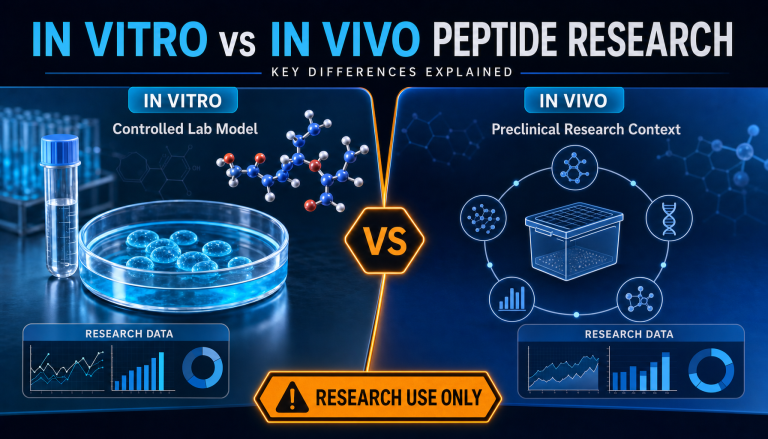
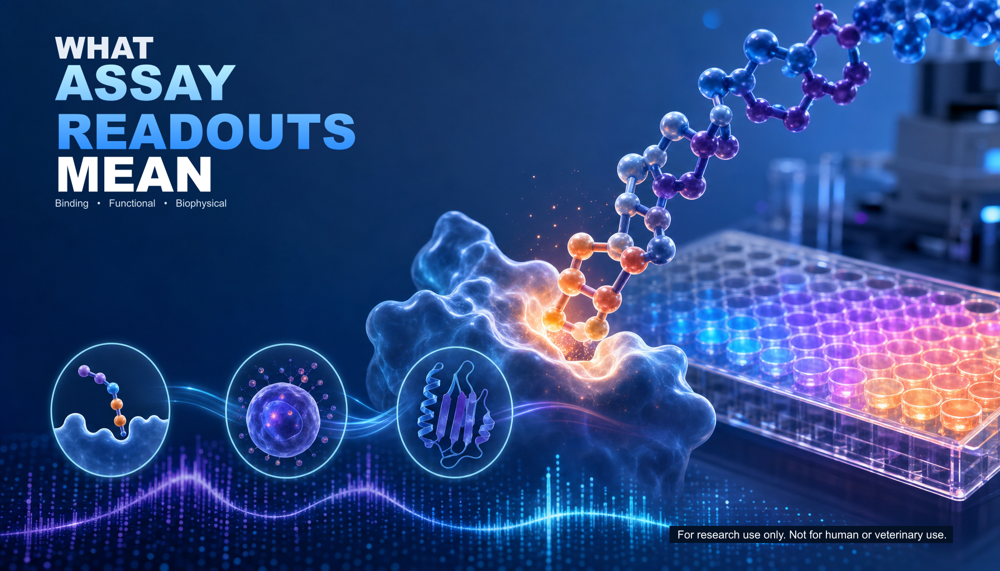
If you missed it, start here: How Researchers Measure Peptide Activity in Lab Studies. Building on that foundation, this article explores the next logical question: what do peptide assay readouts actually mean in preclinical research? Understanding how assay signals, controls, binding behavior, and data limitations are interpreted in laboratory settings helps clarify how research suggests peptides function at a molecular level.
The next logical question is: How are peptide assay readouts interpreted in preclinical research?
Peptide assay readouts provide critical data in laboratory settings, but interpreting these results requires understanding the context and limitations of the assays used. Research suggests that signals observed in assays must be carefully analyzed alongside controls and binding behavior to draw meaningful conclusions. Studies indicate that assay readouts are influenced by experimental design, peptide properties, and environmental factors, making interpretation a nuanced process in preclinical research.
Main concept foundation
At its core, peptide assay readouts are measurable signals generated by interactions between peptides and their targets or environments in laboratory assays. These signals can include fluorescence, absorbance, mass spectrometry peaks, or binding kinetics. Understanding these readouts involves recognizing the assay type, the nature of the peptide-target interaction, and the controls used to validate the results.
In preclinical research, assay readouts help characterize peptide activity, binding affinity, and specificity. However, these data come with inherent limitations such as background noise, non-specific binding, and environmental crowding effects, which studies indicate must be accounted for to avoid misinterpretation.
- Signal type (e.g., fluorescence, mass spectrometry)
- Controls for specificity and background
- Binding behavior under assay conditions
- Data limitations and variability
Signals and Controls in Peptide Assays
Assay signals are the primary data outputs indicating peptide presence or activity. These signals must be distinguished from background noise using appropriate controls. Research suggests that including negative and positive controls in assay design is essential to validate signal specificity and reliability in laboratory settings.
Controls help identify non-specific interactions and assay artifacts, ensuring that observed signals truly reflect peptide behavior. Studies indicate that multiplexed peptide identification methods improve accuracy by comparing multiple peptide fragments simultaneously, enhancing confidence in assay readouts.
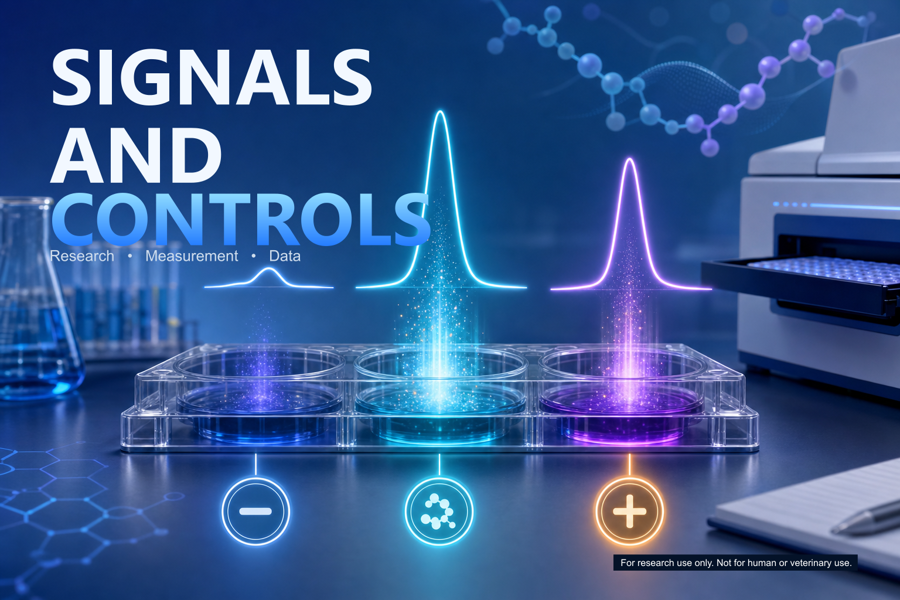
Careful calibration and control inclusion allow researchers to differentiate true peptide signals from experimental noise. This foundation is critical for interpreting binding data and downstream functional assays in preclinical research.
- Negative controls to detect background signals
- Positive controls to confirm assay responsiveness
- Multiplexed peptide fragment analysis
- Calibration standards for signal quantification
Learn Peptide Research the Simple Way
If you’re new to peptide research, this beginner-friendly guide walks through the core concepts step by step so you can better understand how peptides are studied in laboratory settings.
- Understand how peptides are studied in laboratory settings
- Learn the core concepts behind peptide research
- Start with a beginner-friendly guide — no technical background required
For educational and research purposes only.
Binding Behavior and Environmental Effects
Binding interactions between peptides and their targets are central to assay readouts. Research suggests that binding energetics can vary significantly under crowded conditions that mimic cellular environments. These conditions affect peptide affinity and specificity, influencing assay outcomes in laboratory settings.
Studies indicate that crowding agents and molecular interactions can alter peptide binding behavior, which must be considered when interpreting assay data. Understanding these effects helps contextualize assay readouts within realistic biological scenarios.

Accounting for environmental factors in assay design and data interpretation improves the relevance of peptide binding data in preclinical research. This approach supports more accurate modeling of peptide-target interactions.
- Impact of molecular crowding on binding affinity
- Variability in peptide-target interaction strength
- Influence of assay buffer conditions
- Consideration of physiological mimics in assays
Data Limitations and Interpretation Challenges
While peptide assay readouts provide valuable insights, they come with inherent limitations that complicate interpretation. Research suggests that factors such as signal overlap, peptide degradation, and non-specific binding can confound results in laboratory settings.
Studies indicate that recognizing these limitations and applying rigorous controls and validation methods are essential for reliable conclusions in preclinical research. Awareness of these challenges helps researchers avoid overinterpreting assay data.
Careful experimental design and data analysis strategies help mitigate these limitations, enabling more accurate interpretation of peptide assay readouts and supporting the advancement of peptide research.
- Potential for signal interference and overlap
- Peptide stability during assays
- Non-specific binding artifacts
- Need for complementary validation techniques
How These Ideas Work Together
Interpreting peptide assay readouts in preclinical research requires integrating knowledge of assay signals, controls, binding behavior, and data limitations. Each aspect contributes to a comprehensive understanding of peptide activity and interactions in laboratory settings.
Research suggests that combining rigorous controls with awareness of environmental effects and data challenges leads to more reliable conclusions. Studies indicate that this holistic approach supports meaningful insights into peptide function, guiding further research and development.
Key Takeaways
- Peptide assay readouts reflect measurable signals influenced by assay design and environment.
- Controls are essential to validate signal specificity and reduce background noise.
- Binding behavior varies under crowded, physiologically relevant conditions.
- Data limitations require careful interpretation and complementary validation.
- Integrating these factors supports accurate interpretation in preclinical peptide research.
Ready to Go Deeper Into Peptide Research?
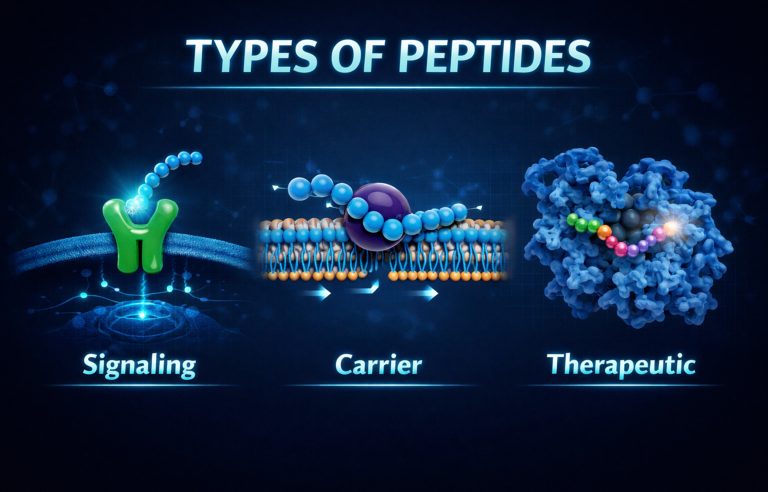
If this helped you understand the different types of peptides, the next step is building a stronger foundation. Our beginner guide walks through the key concepts researchers use, without the confusion.
Designed for beginners. No technical background required.
- Learn the core concepts behind peptide research
- Understand key factors like stability, purity, and documentation
- See how peptides are studied and evaluated in research settings
For educational and research purposes only.
What Comes Next
The next article in this series, Peptide Binding Affinity Explained, will continue exploring peptide interactions by focusing on how binding strength is measured and interpreted. This follow-up will deepen understanding of assay readouts by examining affinity metrics in detail, further supporting preclinical research efforts.
Frequently Asked Questions
A peptide assay readout is the measurable signal generated by an assay that indicates peptide activity, binding, or presence in laboratory settings.
Controls help distinguish true peptide signals from background noise or non-specific interactions, ensuring reliable interpretation of assay data.
Environmental factors like molecular crowding and buffer conditions can influence peptide binding behavior, impacting assay readouts in preclinical research.
Limitations include signal overlap, peptide degradation, and non-specific binding, which require careful experimental design and validation to address.
Research Use Only Disclaimer
This content is provided for educational and informational purposes only.
For research use only. Not for human or veterinary use.
Not intended to diagnose, treat, cure, or prevent any disease or condition.
PubMed References
- Zheng W; Saliba JG; Wei X; Shu Q; Pierson LM; Mao L; Liu C; Lyon CJ; Li CZ; Wimley WC; Hu TY. Nanopore-based disease diagnosis using pathogen-derived tryptic peptides from serum.. Nano today. 2022 Aug. PMID: 37034182
- Weisbrod CR; Eng JK; Hoopmann MR; Baker T; Bruce JE. Accurate peptide fragment mass analysis: multiplexed peptide identification and quantification.. Journal of proteome research. 2012 Mar 02. PMID: 22288382
- Stadmiller SS; Aguilar JS; Parnham S; Pielak GJ. Protein-Peptide Binding Energetics under Crowded Conditions.. The journal of physical chemistry. B. 2020 Oct 22. PMID: 32936642